Category Archives: Uncategorized

Firearm Market Trends Collectors

Firearm Market Trends Collectors Should Watch This Year

The firearm market changes every year. Prices go up and down. Some models have become rare. Some models become easy to find. Collectors must watch these changes to protect their money and grow their collection. This year, many strong trends are shaping how people buy and sell guns. This guide will explain these trends in very simple English. It will also help you understand where the market is going and what collectors should watch closely. 

The Value of Antique Firearms  

Many collectors now want older guns with a clear history. They are not only buying modern guns. Prices of Antique Firearms are rising because fewer clean pieces are left in the market. Many old guns were damaged over time. Clean and original models are rare today.  

Another reason for this trend is trust. Many buyers feel safer buying older guns that do not change in value as fast. Modern guns can lose value quickly. But Antique Firearms often grow in value over time. This makes them a smart long-term choice for collectors. 

Online Demand for Firearms for Sale Is Growing 

The number of people searching online for firearms for sale is growing every month. More buyers now start their search on the internet. They want to compare models, prices, and photos before making a decision. 

The rise in searches for firearms for sale also shows that many new collectors are entering the market. These are young buyers who want to build their first collection. They are learning fast and want honest sellers with good stock. 

Collector Focus Is Shifting to Quality 

In the past, many buyers wanted large collections. They bought many guns at a low cost. Today, the focus is different. Collectors now want fewer guns, but better ones. They care about the condition, matching parts, and a clean finish. 

This change affects Antique Firearms the most. A scratched or broken antique gun sells slowly. But a clean piece with original parts sells fast and for a high price. Collectors now wait longer and save more to buy the right item. 

The same is true for firearms for sale in the modern market. Buyers check reviews, details, and service. They do not rush. They want value, not just low cost. 

Houston Is Becoming a Major Collector Hub 

Houston is becoming one of the most important cities for gun collectors. Many people now search for the best gun store in Houston, Texas, because the city offers a strong supply and trusted sellers. 

When users search for the best gun store in Houston, Texas, they often derive a different kind of value than mere pricing. They want advice, trust, and clear records. This is why Houston is growing in the collector’s world. 

Older Military Models Are in High Demand 

Another big trend this year is the rise in demand for old military guns. Collectors want rifles and pistols used in wars or by special units. These guns tell a story. 

Many of these models fall under Antique Firearms or early vintage guns. Their value rises when they have clear proof of origin. A gun with papers or marks sells much faster. 

Buyers searching for firearms for sale now filter results by year and origin. This shows how serious the market has become. It is no longer about looks only. It is about history. 

Prices Are Becoming More Stable 

In past years, prices have changed very fast. Panic buying pushed prices up. Then prices dropped suddenly. This year, the market is calmer. 

Collectors are thinking about buying them. Sellers are listing fair prices. This creates a stable market. Antique Firearms are not seeing wild swings. Modern Firearms for sale are also holding steady. 

Trust and Service Matter More Than Ever 

Buyers today want safety and support. They do not want confusion or hidden details. This is why many people search repeatedly for the best gun store in Houston, Texas. They are not only looking for products. They are looking for good service. 

Stores that explain laws, shipping, and care earn more trust. This trust turns first-time buyers into long-term collectors. 

Conclusion 

This year is a strong year for collectors who watch the right trends. Antique Firearms are gaining value and respect. Searches for firearms for sale are rising as more people enter the hobby. Houston is becoming a key city, and many collectors now look for the best gun store in Houston, Texas to find trusted service and rare items. 

For collectors seeking quality, history, and professional assistance, Collectors Firearms is a name that is highly recognized. Their website displays not only a large assortment of Antique Firearms and modern Firearms for sale, but also very useful services such as buying, selling, appraisals, and repairs. Many collectors trust them when searching for the best gun store in Houston Texas, because of their large collection and deep knowledge of the firearm market. 
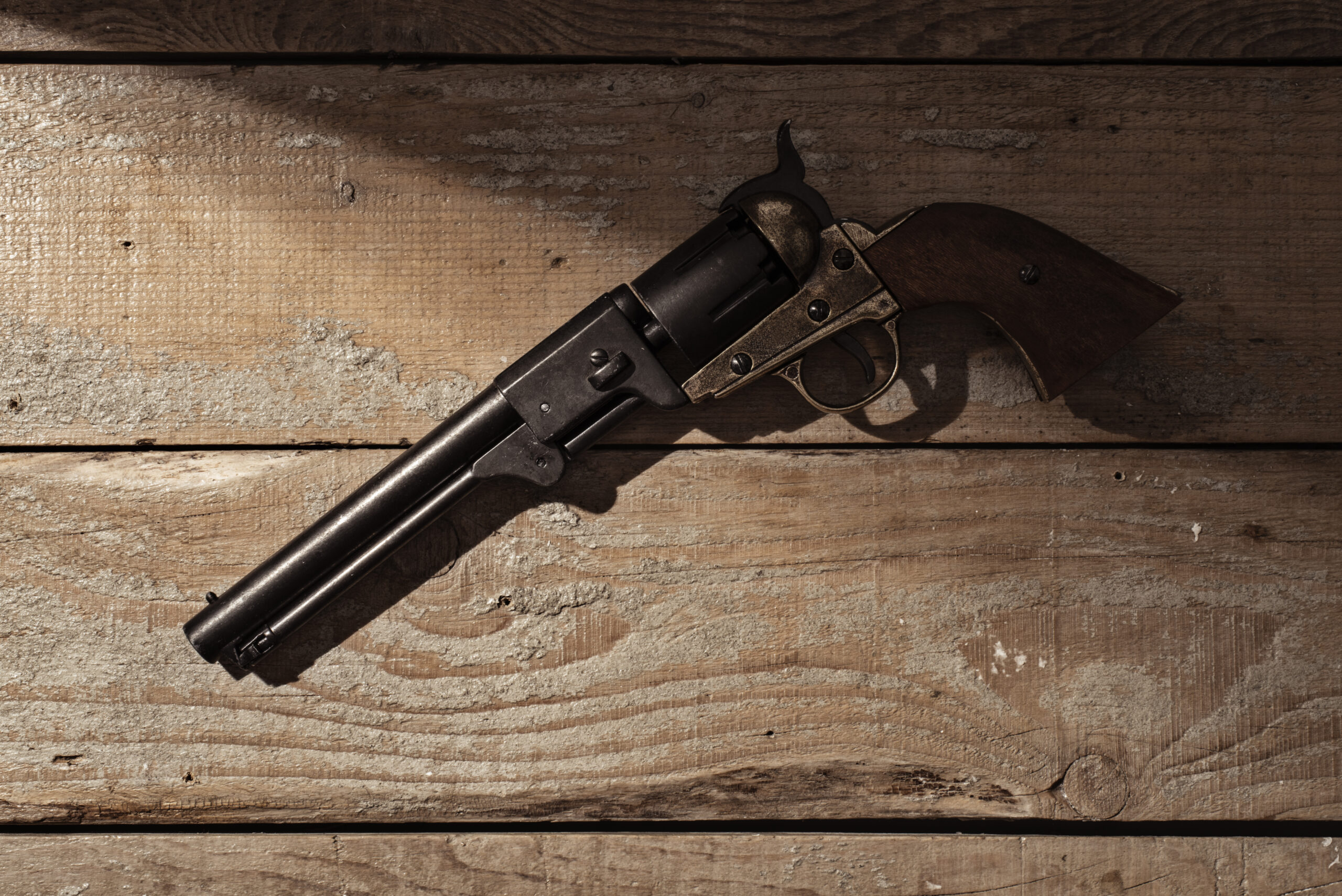
classic firearms

How to Identify Historical Markings on Antique Firearms and Blades

Historical markings are the fingerprints of antique weapons. Long after records are lost or altered, stamps, proofs, and engravings remain embedded in metal and steel. For collectors, these markings often reveal more than written descriptions ever could. They point to the origin, era, maker, and sometimes even the journey an item took before reaching its current owner. 

Understanding these details is essential for anyone collecting classic firearms or historical blades. Markings are not decoration. They are documentation. 

Why Historical Markings Matter to Collectors 

Antique weapons usually had a known maker. Governments, guilds, and individual artisans used marks for identification, quality control, or legal compliance. Over the years, these markings have become significant reference points. 

Collectors rely on them for: 

  • Authenticity confirmation 
  • Approximate manufacturing date determination 
  • Country or region of origin identification 
  • Original components and later replacements distinction 

For the people who are building or expanding a collection, learning to read these details is a part of being a responsible owner. 

Common Types of Markings Found on Antique Firearms 

Era and location are factors that influence the antique firearms markings, but there are some that are always present. 

Proof Marks 

A proof mark is put on a firearm only after it is tested and declared safe. Each country had its own symbols, letters, or numbers to indicate the testing and approval of firearms. The British, German, Belgian, and French proof systems each have their own characteristics. 

Proof marks usually indicate: 

  • Testing authority 
  • Pressure standards 

Time period of inspection 

Knowing these marks, one can determine the place and time of origin more precisely. 

Manufacturer and Maker Stamps 

Some firearms have the name or even the initials of the maker, workshop, or armory on them. These stamps can be found on the barrel, lock, receiver, or tang. 

Nevertheless, not all markings are simple to detect. Some markings can be very faint, partially erased, or even covered by stocks or fittings. 

Markings Found on Antique Blades 

Swords, daggers, and bayonets frequently show marks, which are distinct from those on guns. 

The markings on blades that are most frequently seen consist of 

  • Maker’s marks or guild symbols 
  • Arsenal stamps 
  • Inspection marks 
  • Regimental or unit identifiers 

Markings on blades frequently become part of the forging process instead of getting applied afterward. This is what makes them uniquely significant for authentication purposes. 

Location of Markings Matters 

Where a marking appears can be just as important as the mark itself. 

For example: 

  • Proof marks are typically found near the breech 
  • Maker’s marks often appear on barrels or lock plates 
  • Assembly numbers may be hidden beneath grips or stocks 

Knowing where to look prevents misidentification and helps avoid assumptions based on incomplete inspection. 

Wear, Aging, and Incomplete Marks 

The markings reveal the effects of time. Factors such as corrosion, polishing, and handling can either completely or partially erase markings or make the edges appear softer. However, such wear does not mean that the artifact is not authentic. 

Knowledgeable collectors are aware of the following: 

  • Slight wear is a normal thing 
  • Variable depth may be a sign of hand-stamping 
  • Clean or even marks can indicate later additions 

At this point, the comparison with the documented examples becomes vital. 

Using Reference Material Correctly 

There is no one guide that covers every marking that has ever been used. The most reliable identification comes by way of checking several sources against one another. 

Among the recognized resources for gun collectors are: 

  • The already existing directories of proof marks 
  • Archives of museums 
  • Documentation of armories from that time 
  • Records of recognized dealers 

When to Seek Professional Verification 

Certain markings fall into categories such as rare, disputable, or frequently counterfeited. In those situations, the involvement of a professional is necessary. The following are some of the situations that require expert scrutiny: 

  • Acquisitions of high value 
  • Markings that are in conflict 
  • Strange symbol combinations 
  • Objects that have had their surfaces changed 

Established firearms dealers near me with experience in historical arms can often assist or recommend specialists. 

Avoiding Common Identification Mistakes 

Many misidentifications stem from assumptions rather than proof. The following are typical mistakes:  

  • Thinking that the corresponding numbers are the ones that prove the item to be original  
  • Taking a decorative engraving wrongly as the proof mark 
  • Not considering the regional differences in cleaning of surfaces leading to removal of evidence 

Always wait and exercise caution to preserve the value and historical integrity of the firearms. 

FAQs 

Do all antique firearms have identifiable markings? 

No. Some early or privately made weapons may carry minimal or no marks. 

Can markings confirm exact manufacturing dates? 

Usually they provide a range, not an exact year. 

Are faint markings less valuable? 

Not necessarily. Wear is expected and often preferred to restored surfaces. 

Should markings be cleaned to make them clearer? 

No. Cleaning can permanently damage or remove historical evidence. 

Conclusion 

Historical markings are an effective medium connecting ancient weapons to their time. Collectors can learn the true origin and context of these symbols, not just their surface appearance. Whether it is classic guns or old knives, meticulous watching and reliable reference material are fundamental. 

Professional gun dealers are helpful for collectors who require assistance with accurate identification. Collectors Firearms promotes informed collecting practices that honor both the maker’s skills and the past. 

Contact us today.

Top Shotguns for Sporting Clays: Precision, Performance, and Prestige

Sporting clays is often described as “golf with a shotgun” — a test of precision, versatility, and mental focus. The right firearm can make all the difference, turning a challenging course into a rewarding shooting experience. Whether you’re a weekend enthusiast or a competitive shooter, these five shotguns stand out as premier choices for sporting clays, each offering exceptional craftsmanship, balance, and shootability.

1. Beretta A400 Xcel Sporting

Engineered specifically for clay sports, the Beretta A400 Xcel Sporting blends modern technology with Italian precision. Its Blink gas system delivers fast, clean cycling with minimal recoil, making it ideal for extended rounds. The ergonomic design, oversized controls, and adjustable stock ensure a custom fit and superior handling. With its sleek lines and proven performance, the A400 Xcel is a favorite among competitive shooters.

2. Benelli Ethos Supersport

The Benelli Ethos Supersport brings elegance and innovation to the sporting clays field. Its carbon-fiber finish and ported barrel reduce weight and recoil, while the inertia-driven system ensures reliable cycling with minimal maintenance. Light, fast, and smooth, the Ethos Supersport is ideal for shooters who value speed and agility, especially on fast crossers and tricky report pairs.

3. Beretta 686 Silver Pigeon Sporting

A timeless over-under, the Beretta 686 Silver Pigeon Sporting is known for its beautiful aesthetics and impeccable balance. With its low-profile receiver and crisp trigger, this shotgun offers a refined shooting experience that’s ideal for both novice and seasoned clay shooters. It’s a gun that not only performs under pressure but also looks the part — an enduring symbol of Beretta’s legendary craftsmanship.

4. Beretta 688 Performance Sporting

Designed with input from top clay shooters, the Beretta 688 Performance is purpose-built for competitive excellence. It features a redesigned stock for improved pointability, an adjustable trigger, and enhanced weight distribution for better balance and recoil management. This is a shotgun that instills confidence with every mount and shot — a serious tool for serious competitors.

5. Caesar Guerini Summit Sporting

A standout in both form and function, the Caesar Guerini Summit Sporting combines Italian artistry with precision engineering. Its adjustable stock, crisp mechanical trigger, and hand-finished details make it one of the most respected sporting shotguns in its class. Designed for consistency and comfort, the Summit Sporting excels across varied target presentations, offering a luxury feel without compromising performance.

Conclusion:

Each of these shotguns brings its own strengths to the sporting clays course, whether it’s the rapid-fire speed of the A400 Xcel, the classic feel of the 686 Silver Pigeon, or the competition-grade precision of the 688 and Summit Sporting. For those passionate about the sport, investing in one of these shotguns means more than just better scores — it’s about elevating the entire shooting experience.

Top Shotguns for Texas Bird Hunting: A Closer Look at Five Standouts

Texas bird hunting is more than a tradition — it’s a way of life. Whether you’re flushing quail through mesquite thickets, calling in dove over sunflower fields, or tracking ducks along the coast, having the right shotgun is essential. Here are five exceptional shotguns that stand out in the Lone Star State for their performance, reliability, and overall shooting experience.

1. Beretta A400

The Beretta A400 is a technological marvel, designed for speed, low recoil, and versatility. Its Blink gas-operating system allows for lightning-fast follow-up shots — ideal for fast-moving flocks of teal or dove. With a lightweight yet durable build, the A400 is equally at home in muddy marshes or dry West Texas fields. It’s a favorite among Texas hunters who demand consistent performance under pressure.

2. Beretta A300

A slightly more affordable sibling to the A400, the Beretta A300 is known for rugged reliability and smooth cycling. It’s a workhorse of a shotgun, perfect for hunters who put in long hours in the blind. Its simple design and dependable function make it a top choice for dove hunts, and its soft recoil ensures comfort even through high-volume shooting days.

3. Benelli Super Black Eagle III

When goose season rolls around, the Benelli SBE III reigns supreme. Its inertia-driven system means fewer moving parts and less maintenance — a critical advantage when you’re knee-deep in marsh water. Renowned for handling heavy loads with ease, it’s the go-to for waterfowlers braving the elements in Texas’ coastal prairies and panhandle playa lakes. The SBE III is a gun you can trust when the shooting gets serious.

4. CZ 1012

The CZ 1012 offers outstanding performance at a mid-range price, making it one of the best values on the market. With its gas-less inertia operating system, it runs clean and smooth, even after hundreds of rounds — ideal for the high-volume action of a South Texas dove shoot. Its lightweight design and balanced feel make it accessible for both new and seasoned hunters alike.

5. Beretta 686

For traditionalists and upland bird hunters, the Beretta 686 over-under is a timeless classic. Its elegant design belies the rugged dependability it offers in the field. Light and quick to shoulder, it’s a dream for walking behind pointing dogs in pursuit of quail. The craftsmanship, balance, and simplicity of the 686 make it a prized companion on any Texas ranch.

Conclusion:

Whether you’re chasing quail in the Hill Country, waterfowl on the coast, or doves across sunflower fields, these five shotguns offer the versatility, reliability, and performance that Texas bird hunters demand. Each one excels in its own right, proving that great gear makes great hunts even better.

Five Excellent Handguns for Self-Defense in 2025

When it comes to personal protection, choosing the right firearm is critical. You need a handgun that balances reliability, ergonomics, and performance under pressure. Here are five excellent choices that stand out in 2025 for self-defense, each offering a unique blend of features for concealed carry or home defense.

1. Beretta 92GTS

A modern evolution of the iconic 92 series, the Beretta 92GTS enhances classic design with 21st-century updates. It features a frame-mounted decocker, improved ergonomics, and a smooth trigger pull, making it well-suited for both new and experienced shooters. The GTS is renowned for its reliability and accuracy—critical traits in high-stress scenarios.

2. Smith & Wesson M&P Shield Plus Carry Comp

This compact powerhouse offers 13+1 capacity in a slim, carry-friendly package. The integrated compensator reduces muzzle rise for faster follow-up shots, and its crisp trigger and enhanced grip texture provide excellent control. For concealed carry users, the Shield Plus Carry Comp is a top-tier option that blends performance and portability.

3. FN 509

Built to meet rigorous military standards, the FN 509 is a robust, duty-grade handgun with a reputation for rugged reliability. Available in multiple configurations, the 509 series offers ambidextrous controls, excellent sights, and a comfortable grip—making it a great option for both home defense and concealed carry with the compact variants.

4. Walther PDP F Series

Designed with female shooters in mind but ideal for anyone seeking a refined ergonomic experience, the PDP F Series offers a shorter trigger reach and easier slide manipulation. It retains the hallmark performance of the PDP line—precision, modularity, and an outstanding trigger. The PDP F is both shooter-friendly and defense-ready.

5. CZ P-09 Nocturne

The P-09 Nocturne brings CZ’s full-size polymer design into a bold, tactical look with its exclusive finish. It boasts a 19+1 capacity, smooth DA/SA trigger system, and exceptional balance. While it’s more suited for home defense due to its size, the Nocturne delivers accuracy and dependability that rivals any pistol in its class.

Conclusion

Whether you prioritize concealability, ease of use, or tactical performance, these five handguns offer dependable solutions for self-defense. As always, proper training, safe storage, and legal awareness are just as important as choosing the right firearm.

Top 5 Firearms for Home Defense in 2025

Selecting the right firearm for home defense is about balancing reliability, ease of use, and effectiveness in high-stress situations. Whether you’re new to firearms or an experienced gun owner, here are five top-tier choices in 2025 that offer excellent performance and peace of mind:

1. Mossberg 590 Tactical Shotgun

  • Type: Pump-action shotgun
  • Gauge: 12
  • Capacity: 6+1 to 9+1
  • Why It’s Great:
    Renowned for its rugged reliability, the Mossberg 590 is a time-tested choice for close-quarters defense. Its short barrel and intuitive manual operation make it ideal for high-pressure scenarios, especially in tight spaces.

2. Heckler & Koch VP9

  • Type: Semi-automatic pistol
  • Caliber: 9mm
  • Capacity: 15+1 or 17+1 (depending on magazine)
  • Why It’s Great:
    The VP9 combines German engineering with superior ergonomics and a crisp trigger. Its ambidextrous controls and customizable grip panels make it a great fit for a wide range of users. The VP9 is highly accurate, reliable, and built to perform under stress.

3. Smith & Wesson M&P9 M2.0

  • Type: Semi-automatic pistol
  • Caliber: 9mm
  • Capacity: 17+1
  • Why It’s Great:
    With an aggressive grip texture, solid ergonomics, and improved trigger, the M&P9 M2.0 is a standout among modern 9mm pistols. It’s a trusted platform for law enforcement and civilian defenders alike.

4. Ruger AR-556

  • Type: Semi-automatic rifle
  • Caliber: 5.56 NATO/.223
  • Capacity: 30
  • Why It’s Great:
    If you’re trained and comfortable with a rifle, the AR-556 offers excellent control, accuracy, and rapid follow-up shots. It’s well-suited for defending larger homes or properties where longer sight lines exist.

5. Beretta 1301 Tactical

  • Type: Semi-automatic shotgun
  • Gauge: 12
  • Capacity: 7+1
  • Why It’s Great:
    The Beretta 1301 is fast, lightweight, and easy to maneuver indoors. Its gas-operated system allows for quick, smooth follow-up shots—an advantage in high-stress defensive situations.

Final Thoughts:

Every home defense plan should start with proper training and secure storage. The best firearm is the one you can operate confidently and safely. The options above offer a strong balance of firepower, reliability, and user-friendly features—so you can protect your home with confidence.

Five Rifles Texas Deer Hunters Can Rely On

Texas deer hunting isn’t just a pastime—it’s a tradition steeped in rugged landscapes, long seasons, and wary whitetails. Whether you’re tracking through the Hill Country, sitting a South Texas sendero, or watching a Panhandle wheat field, choosing the right rifle can make all the difference. Here are five rifles that Texas deer hunters trust for their reliability, accuracy, and performance in the field.

1. Remington 700 – The Classic Workhorse

For decades, the Remington 700 has been the go-to rifle for generations of Texas hunters. Its legendary accuracy, strong aftermarket support, and wide range of chamberings (like .30-06 and .270 Win) make it ideal for varied Texas terrain. The rock-solid action and customizable design mean hunters can tailor the 700 to their specific style, from brush country to open plains.

2. Ruger American – Value and Performance

Budget-friendly doesn’t mean cutting corners. The Ruger American delivers outstanding accuracy and dependable performance at a price point that appeals to new and seasoned hunters alike. Lightweight and rugged, this rifle is perfect for spot-and-stalk hunting in West Texas or climbing into a South Texas blind. With calibers like .308 and 6.5 Creedmoor, it’s more than enough for Texas whitetail.

3. Sako 90 – Precision Meets Craftsmanship

When only the best will do, the Sako 90 rises to the occasion. Built in Finland with precision machining and premium materials, the Sako 90 offers sub-MOA accuracy and silky-smooth bolt operation. It’s ideal for long-range shots across open fields or senderos, and its refined ergonomics make it a joy to shoot all day. This rifle is for hunters who appreciate a blend of tradition and high-end performance.

4. Tikka T3x – Lightweight Accuracy

Also hailing from Finland, the Tikka T3x is renowned for its crisp trigger and consistent out-of-the-box accuracy. Its lightweight design is perfect for spot-and-stalk hunts or hiking into remote areas. With a variety of stock options and calibers, the T3x can be tailored for everything from dense brush country to open prairie. It’s one of the most versatile rifles on the market today.

5. Browning X-Bolt – Innovation and Elegance

The Browning X-Bolt blends innovative design with classic aesthetics. A crisp Feather Trigger, smooth bolt operation, and top-tier accuracy make it a favorite among serious hunters. Chambered in popular Texas calibers like .270 and .308, the X-Bolt is as much at home in a Hill Country deer stand as it is on a South Texas ranch.

Conclusion:

Whether you prefer traditional rifles or modern innovations, there’s something here for every Texas deer hunter. The Remington 700, Ruger American, Sako 90, Tikka T3x, and Browning X-Bolt each bring something unique to the field—offering dependable performance and the accuracy needed to make every shot count.

collectorsfirearms.com schedule appointment cropped schedule appointment cropped

Your Arms Library – A Retro Look

In addition to reviewing recently issued books, we also take a retro look at some of the old classics from time to time. Although most are out of print, copies are not hard to find at gun shows.

Next to the arms themselves, books are the best investment a collector can make. During the “golden age” of collecting in the 1930s and 40’s, when great finds could still be made, the adage “buy a book for every gun” was coined. At the time, only a small fraction of today’s books were available. Today’s offerings, plus the internet, allow us all to become experts in our areas of interest.

Firearms Curiosa, Lewis Winant, 1955, 281 pages Even though this book is fifty-five years old, it is still the first reference I reach for in my firearms library of 4,000 books when I need information on Curiosa, or as Winant defines the subject “. . . strange and freakish gun fabrications. . . .” The author describes over 300 firearms that are as unusual as pistols in knives and canes; pistols in flashlights, purses, ploughs, whips, bicycle handlebars, stirrups, keys, pipes, belts, sundials, and other very curious contraptions. The first photo in the book shows an early collector wearing a metal vest with nineteen pistols attached. Later in the book, a patent for a helmet with a semi-automatic pistol embedded is described by the inventor as follows: The gun is automatically aimed with the turning of the head in the direction of the target, leaving the hands and feet free to further defend himself.

Those are some of the real curious curiosa. But much of the book is devoted to the less offbeat. There are chapters on two-barrel revolvers, two-cylinder revolvers, knuckle dusters, squeeze pistols, belt buckle pistols, trap and alarm guns, knife pistols, chain guns, and various combination weapons. This well-written book is fun to just browse or to read through from first to last page. Much information on weapons curiosa is still available only in this book. 

The French Trade Gun in North America, 1662 

By Kevin Gladysz

The content statement by the Author pretty much says it all about this very interesting and detailed book: “A complete guide to identifying and understanding Military, Naval and Commercial Weapons manufactured at Saint – Etienne for New France and its Fur Trade”. 

The author has done an outstanding job of detailing and picturing this very important group of firearms that were provided by the French to the native population of French North America as well as citizens and soldiers. It begins with a very complete history of the Saint-Etienne Manufactory showing production figures and pricing of the various types of arms and accessories along with very interesting of the period engravings of maps, facilities, forts and catalogs and very clear black and white photographs of rifles, fusils and fowling pieces that are discussed. 

The following chapter of Saint-Etienne Firearms in New France discusses the decision to allow friendly Native nations to have these firearms, as well as discussions of these same types of firearms being provided to French colonists and soldiers. These include matchlocks, wheel locks, and flintlock arms. There are discussions of unserviceable arms as well as higher-grade types. As they had such value, they were often traded for numerous goods, most often for furs and pelts. There are also discussions of arms for civilian use and interesting things such as the ordinance that in 1686 all colonists were ordered to have enough firearms to arm themselves as well as their servants and children of more than 14 years of age. 53 This book is heavily illustrated and complete with bibliography and index.

Throughout the book are examples of parts of these guns that were unearthed at various North American sites that support the author’s statements as to their configurations and markings that match those of known complete weapons. Various arms throughout the period of interest are shown from several collections. Shown also are examples of both actual and period engravings of the evolution of various parts, such as lockplates, buttplates, and sideplates with decorations, and how those evolved. 

There is a section on the marks and inscriptions that will help the reader understand the significance of arms with these various markings having never been discussed with such detail before. The endnotes and Bibliography are particularly complete and helpful. The research by the author is truly phenomenal. 

Anyone interested in this period in our history will find this book to be extremely useful.

An Introduction to MBA Gyrojets and Other Ordnance 

By Mel Carpenter

This is one of the most fascinating arms-related books I’ve ever read. To those of us who recall the “James Bond” years, it will be particularly so. The Gyrojets that many of us had a nodding acquaintance with are only a small part of the story. (Gyrojets are actually used in the Bond movie “You Only Live Twice”) 

MBAssociates (named for Robert Mainhardt and Dr. Arthur T. Biehl) was formed by two disgruntled Aerojet-General employees. They believed that solid fuel rockets could be scaled down for military purposes. With funding from the research arms of the Government, they proceeded to develop a family of sinister miniature weapons that would have made Bond’s ordnance supplier,”Q” proud. 

The Gyrojets were the only products that were marketed commercially. They were sold as pistols, carbines and survival flares. They never caught on commercially and were ultimately packaged and sold to collectors as curiosa. Although these and other products used rocket technology, the term “jet” was used in many of their product names, probably because it had a better “ring”. 

In addition to providing a thorough presentation on the guns and on the cartridges themselves, the proposed and experimental applications make wonderful reading for gun collectors, cartridge collectors, espionage enthusiasts and ordnance historians.

Besides a thorough presentation on the Gyrojets, much of the book is devoted to lethal and non-lethal gadgets for the CIA and the military. Photographs and diagrams abound throughout this book. Fingers were tiny, inexpensive fin-stabilized rockets that could be mass-fired in salvos to blanket a battlefield with millions of high velocity projectiles simultaneously. Unlike normal gun-fired projectiles, rockets increase in velocity as they approach their targets. Launchers could be as simple as hand-held cardboard tubes. One photograph shows a cigarette pack set up as a finjet launcher. 

Lancejets are tiny, javelin-stabilized, needle-like rockets that could be used as anti-personnel weapons. They could be tipped with lethal or biological chemicals. They could be used underwater to kill sharks or enemy swimmers. They could be employed en-mass to clear areas of mines, both on land or in the water Javettes are needle sized, silent javelin stabilized projectiles that were fired from cartridges. They carried chemical coatings that could kill or temporarily immobilize personnel or guard animals. Real “spook” stuff!

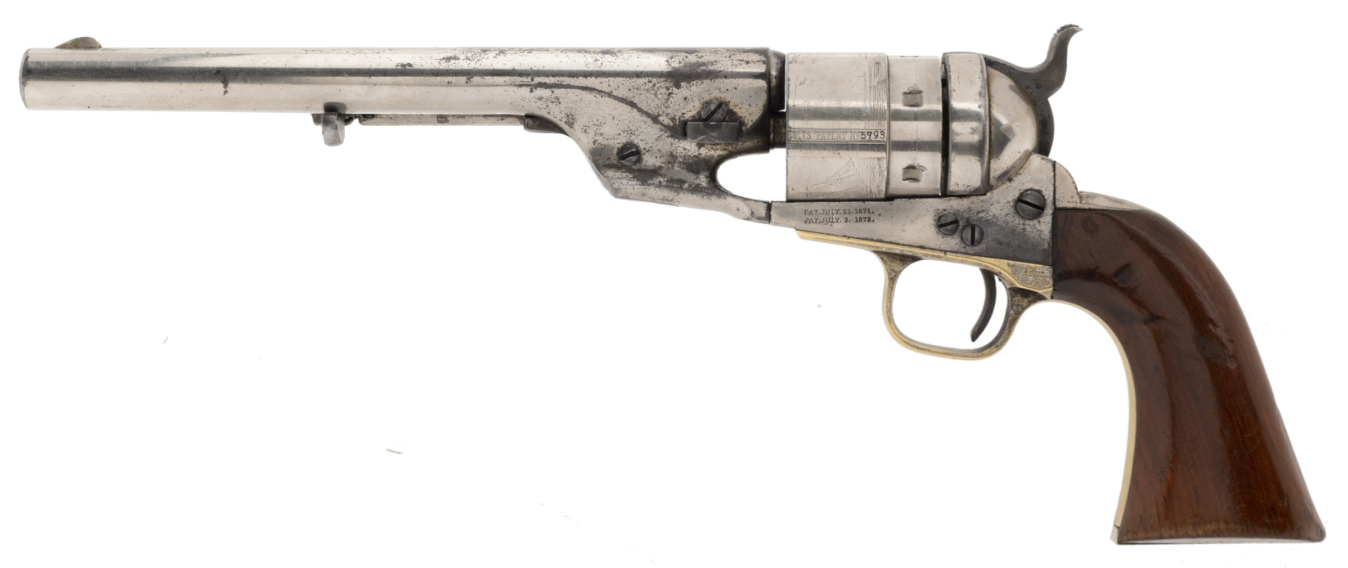
Colt 1860 Army 2nd Model Richards Conversion

Inspector Cartouches on Colt Model 1860 Army Revolver

 By Charles Pate Photographs courtesy of James D. Julia, Inc.

The Colt Model 1860 Army revolver was easily the most popular handgun of the American Civil War. Its supremacy was virtually unchallenged until the introduction of Remington’s New Model Army and even afterwards most soldiers preferred the Colt. And today, even though they were manufactured in great numbers, they are still highly desirable collectors items, especially those that have clear military inspection marks.


Screenshot 2025 05 16 112908


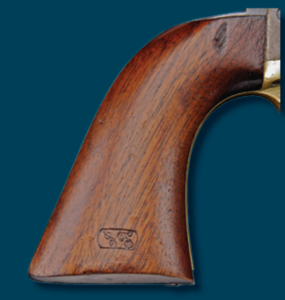
Approximately 130,000 Model 1860 Colts were purchased for the Union, and of these, 125,8571 were purchased under contracts that required their inspection in detail, and the consequent marks that showed they had passed this inspection. In the majority of cases, the ravages of time and hard use have usually erased some of these inspection marks, and one major factor in determining the value of any specific example is whether or not the most fragile of these marks are still present and legible – the cartouches on the wooden grips. Obviously, whether or not the cartouche is present is easily determined. But the legibility of a cartouche is another matter. Even if the marking is strong and clear, it is often hard to read due to the elaborate styles of lettering used. Combine these factors with a rather large number of variations, and it’s easy to see why there is sometimes considerable difficulty in reading these markings. 

The author has collected considerable data on these markings during the process of preparing a book on the Model 1860 Colt and presents his findings here in the hopes that the information will aid in the identification of all the variations and, hopefully, the inspectors whose initials were placed on the pistols. First, however, the reader should understand the roles of the various men involved in the inspection of the Colt Army revolvers, the process they used, and how that process and those roles related to the markings on the pistols. 

Generally speaking, there were three categories of “inspectors” participating in the inspection process: the Inspecting Officer (IO), an Army officer who was authorized to give final inspection approval and receive the pistols as government property; the Principal Sub-inspector (PSI), the senior civilian inspector present who was in charge of the day-to day inspection at the contractor’s facility; and the Sub-inspectors (SI), highly experienced, reliable and capable civilian workmen selected by the IO to actually perform the inspection. 

The inspection process has been addressed in detail in other previously published articles and will be only summarized here, since only parts of it relate to inspector cartouche markings, the subject of this article.2 Briefly stated, the process began with proof firing and marking of the barrel and cylinder to show the pistol had passed this test. Next, each component part was critically inspected to ensure conformance with the approved model and that the part was acceptable in both material and workmanship. After passing these tests, the revolver was once again assembled and given a “final inspection.” Normally, the process called for the PSI to examine the assembled pistol to determine if it was ready for the IO’s examination and, if so, he would mark the left side of the grip with a cartouche containing his initials. The IO usually did not visit the contractor’s facility until he had been advised by the PSI that a set number of pistols, usually 300-500, were ready. With the PSI present, the IO performed the final examination and “received” the pistol if it met with his approval. He marked those pistols that he accepted on the right of the grip with a cartouche containing his initials.3 The IO would then certify acceptance to the appropriate government authorities, who would pay the contractor according to the terms of the contract. 

That is how the process was supposed to work, but naturally, the crisis brought on by the war required some modification. However, the need for expedited procedures was not immediately apparent. The correspondence of Major R. H. K. Whiteley, the IO during the first few months of the war, indicates he was attempting to do business as usual. But the demands for his time precluded him from always being present for the final inspection. His cartouche is present on very few surviving examples, and in some cases, he is known to have told the PSI to conduct the final inspection without him. 

Captain George T. Balch replaced Major Whiteley as the IO for Colt inspections in mid-September, and while he may have attended some of the final inspections, no Model 1860 revolvers have been noted bearing his initials.4 All of the Colt pistols delivered while Captain Balch was the IO have cartouches only on the left of the grip. Balch’s correspondence shows that he was using John Taylor as his principal assistant inspector, but there are a variety of inspector cartouches on pistols delivered in this period, which ended in mid April 1962.5 This probably reflects the facts that Taylor had additional duties as well as the confidence held in some of the other sub-inspectors then present – men like Joseph and Benjamin Hannis, O. W. Ainsworth, and Pomeroy Booth. 

As many as eleven sub-inspectors were assigned to inspection at Colt on occasion and several of the best of them were sent to other manufacturers as the principal sub-inspectors at those facilities. The Army would replace those men with less experienced inspectors and, in some cases, subsequently use them elsewhere after they had gained greater experience and the confidence of the officers.


Screenshot 2025 05 16 112917


Due to problems in completing 2000 Sharps rifles for Colonel Berdan’s Sharpshooters, John Taylor was placed in charge of their inspection in early April 1862. He took with him several of the inspectors then at Colt in an attempt to expedite delivery of the rifles. At about this same time, there was a short hiatus in the delivery of Colt revolvers caused by the Holt-Owen Commission investigation of arms procurement practices. None were delivered in May, and when deliveries resumed on the 9th of June, a change had been made in procedures. Pistols delivered on that date, and subsequently, once again had a cartouche stamped on the right of the grip. However, this cartouche was also that of a civilian, usually the “JT” of John Taylor. This may have resulted from recommendations that Captain Balch had made near the close of his IO duties, in which he called for “a more rigid system of inspection.” It is interesting to note that  Taylor’s cartouche leaned to the left. The cartouche with left-leaning letters predominates in the 40,000 to 85,000 serial number ranges. A cartouche with the letters once again leaning to the right reappears at approximately 75,000 and is the most common “JT” cartouche beginning at about 85,000. 

These cartouches, and others noted on Colt Model 1860 revolvers, are illustrated here through excellent drawings provided by Mr. Anthony Daum, to whom the author is thankful. Hopefully, knowing what the designs look like will facilitate the identification of specimens that are worn and only partially legible.


Screenshot 2025 05 16 112927


There are undoubtedly some errors in the data presented in this article and some anomalies that cannot presently be explained. The author would welcome additional data from the readers in his attempt to make this material more definitive.