- Consignment
- Old West
- Hall of Fame
- American Indian
- Colt Guns
- Winchesters
- Modern Handguns
- Rifles
- Shotguns
- Class III Firearms & NFA Items
- Antique Handguns
- Antique Long Guns
- Commemorative Firearms
- Edged Weapons
- Militaria
- Antique Ammo, Tools & Neat Stuff
- Japanese Swords, Fittings and Firearms
- Ammunition
- Optics & Accessories
Ōmi-Yari by Fujiwara Yoshiyuki, Noto Province — Late Edo (Shin-shintō) (SW1943)







Price: $6,500.00
Item Number: SW1943
Houston Location.
In stock
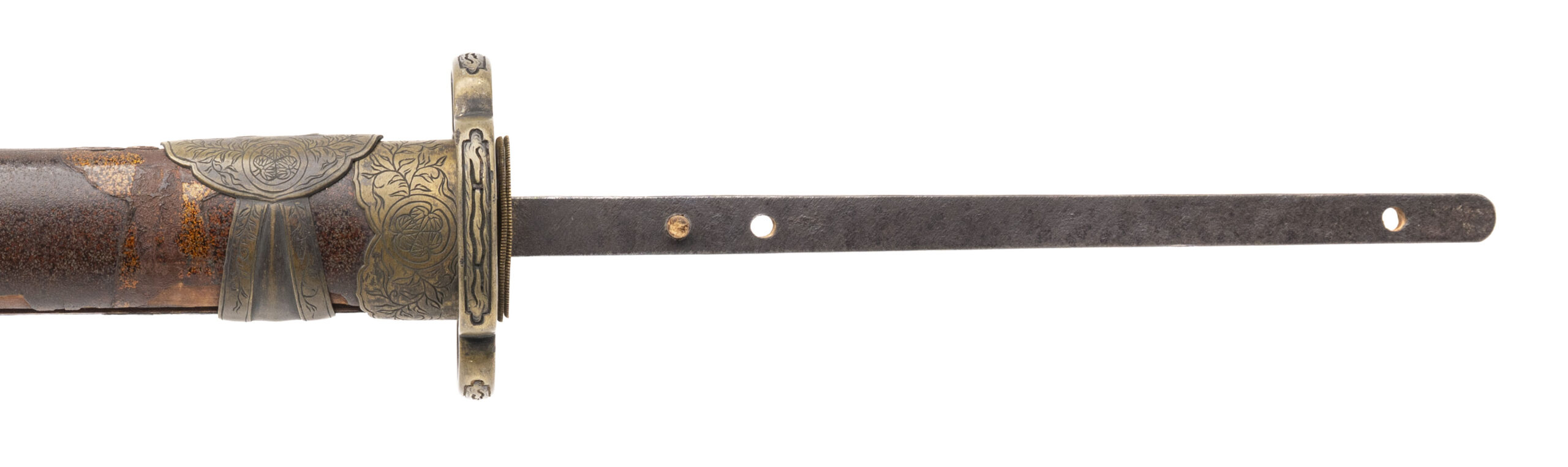
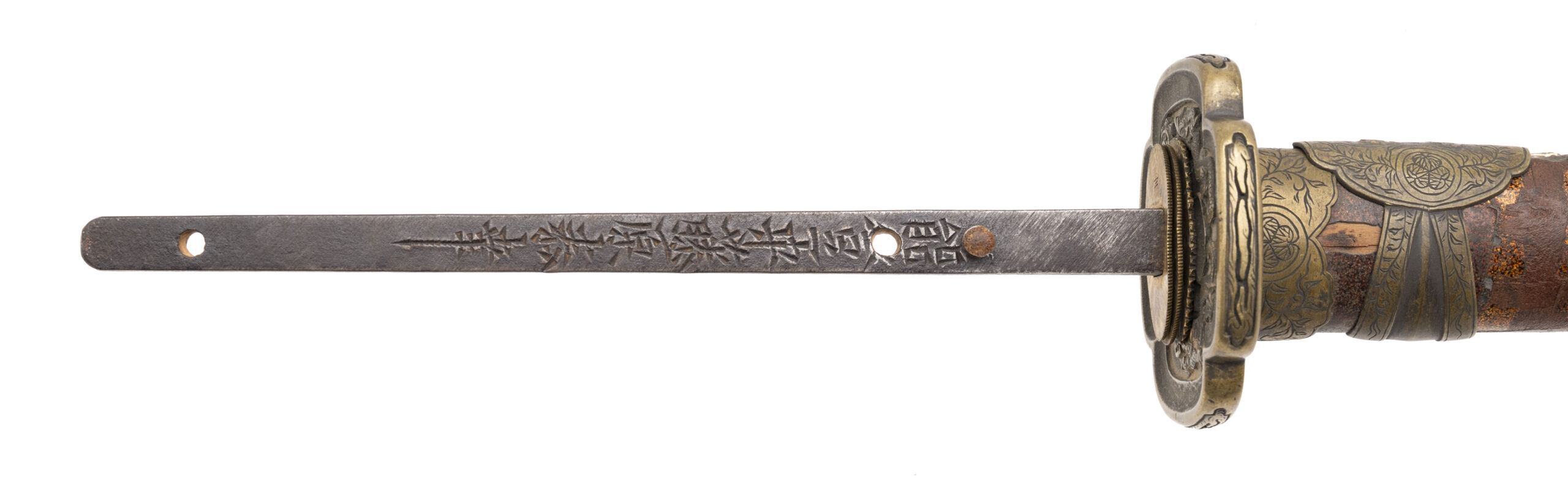
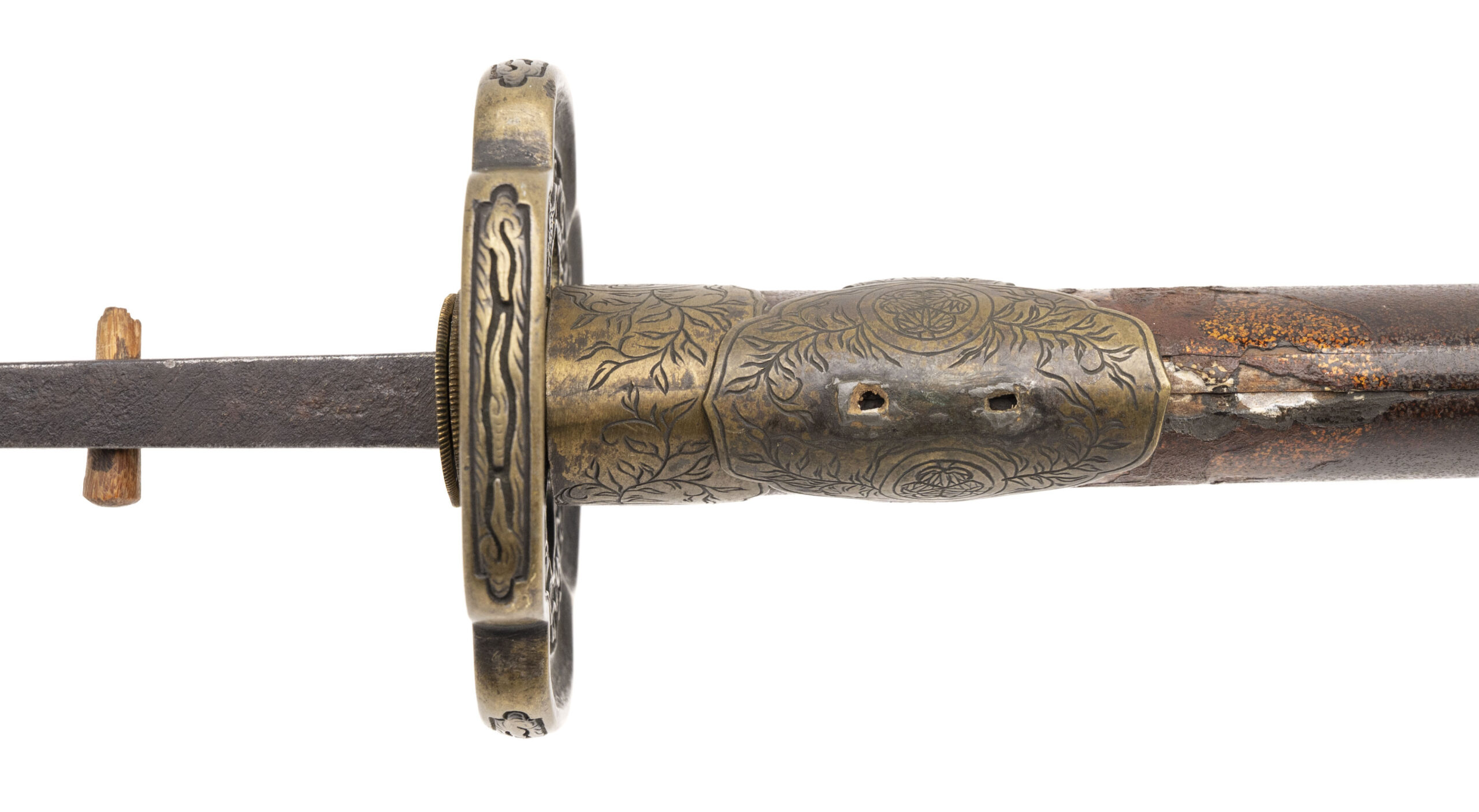
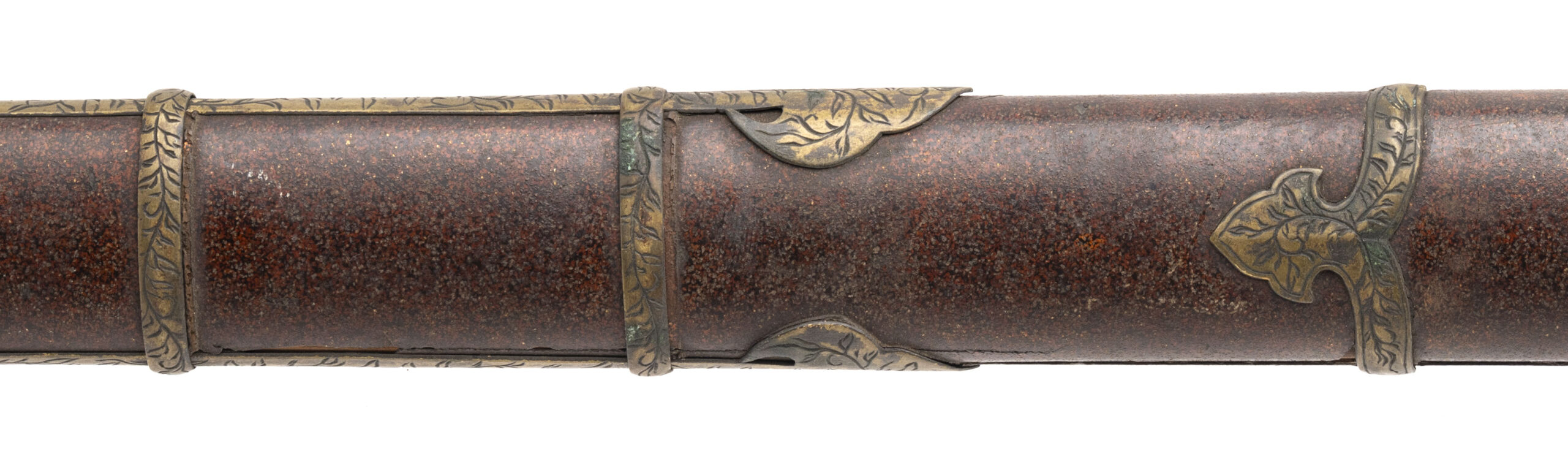
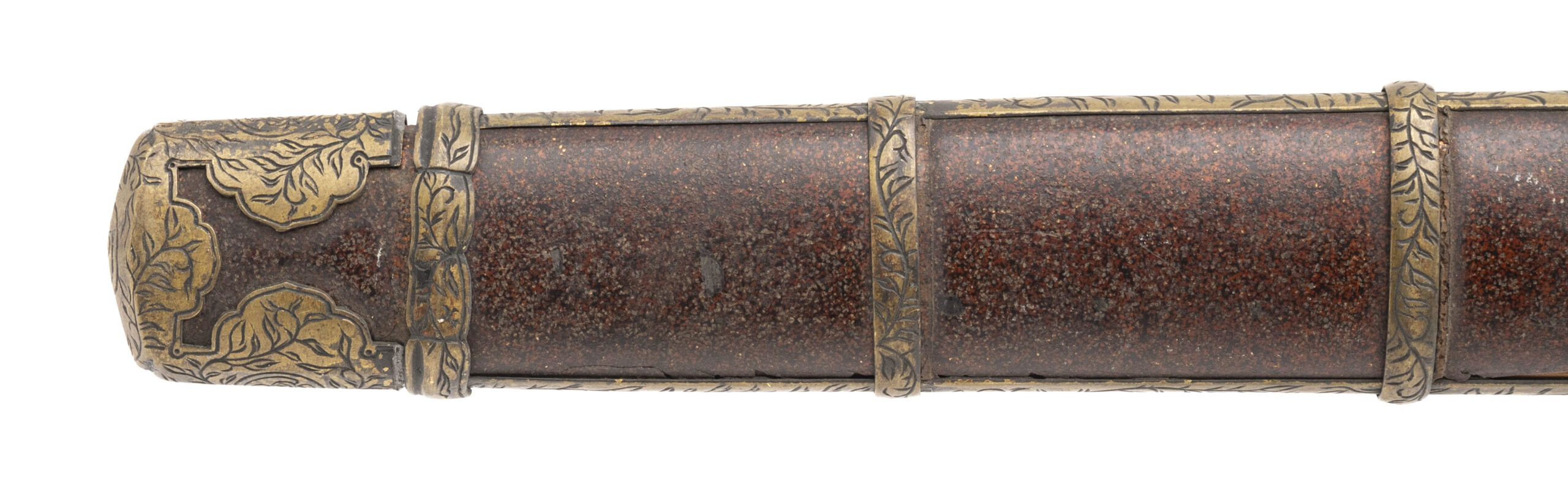
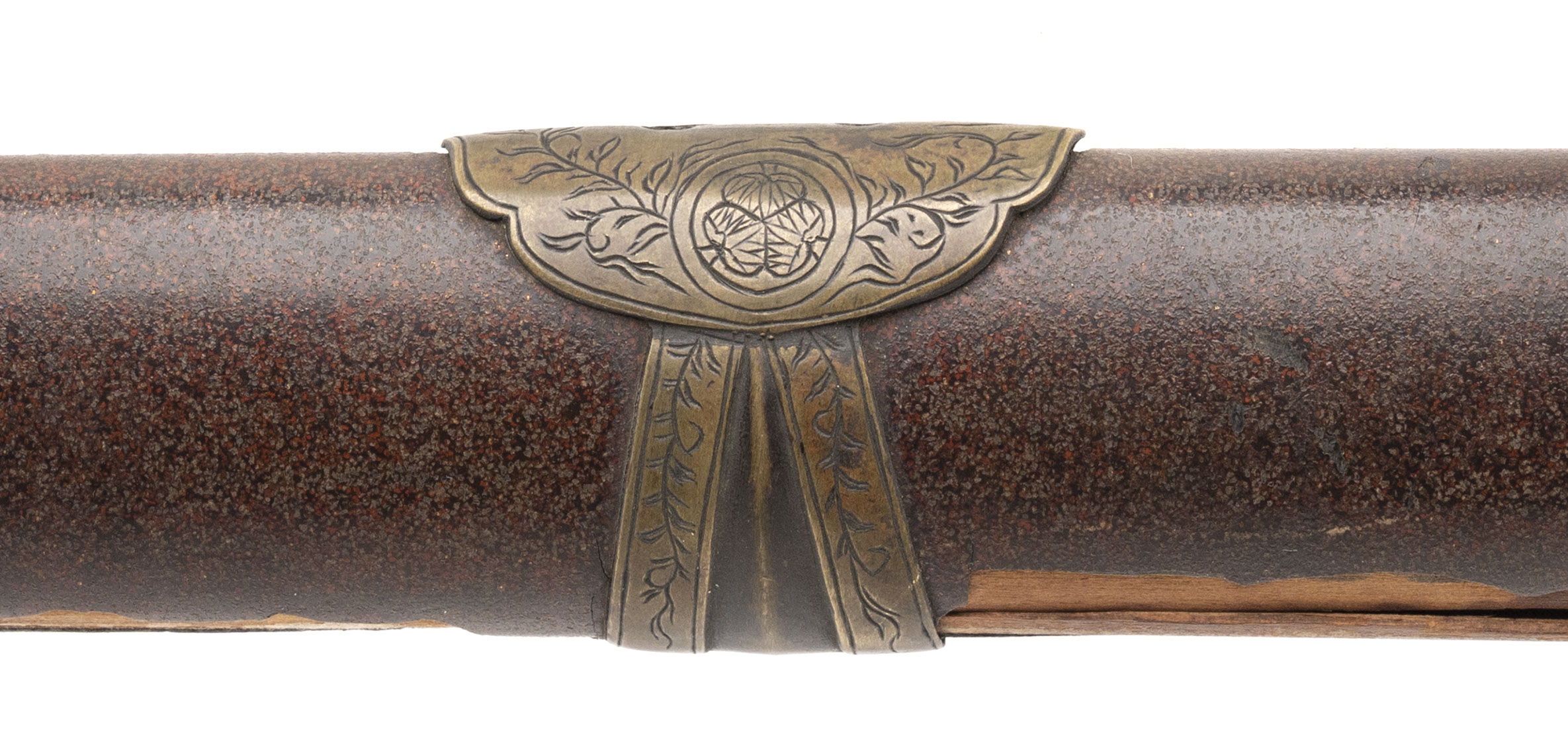
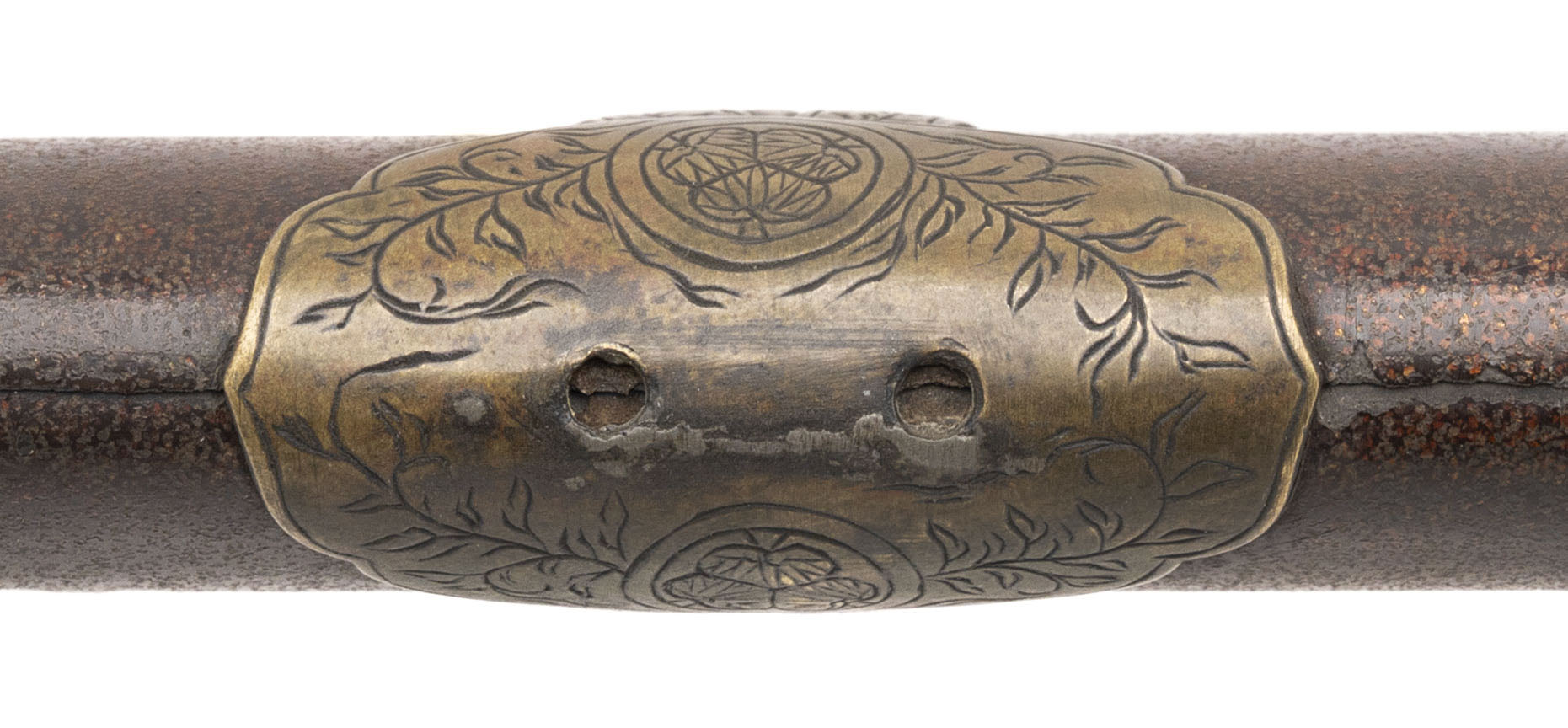
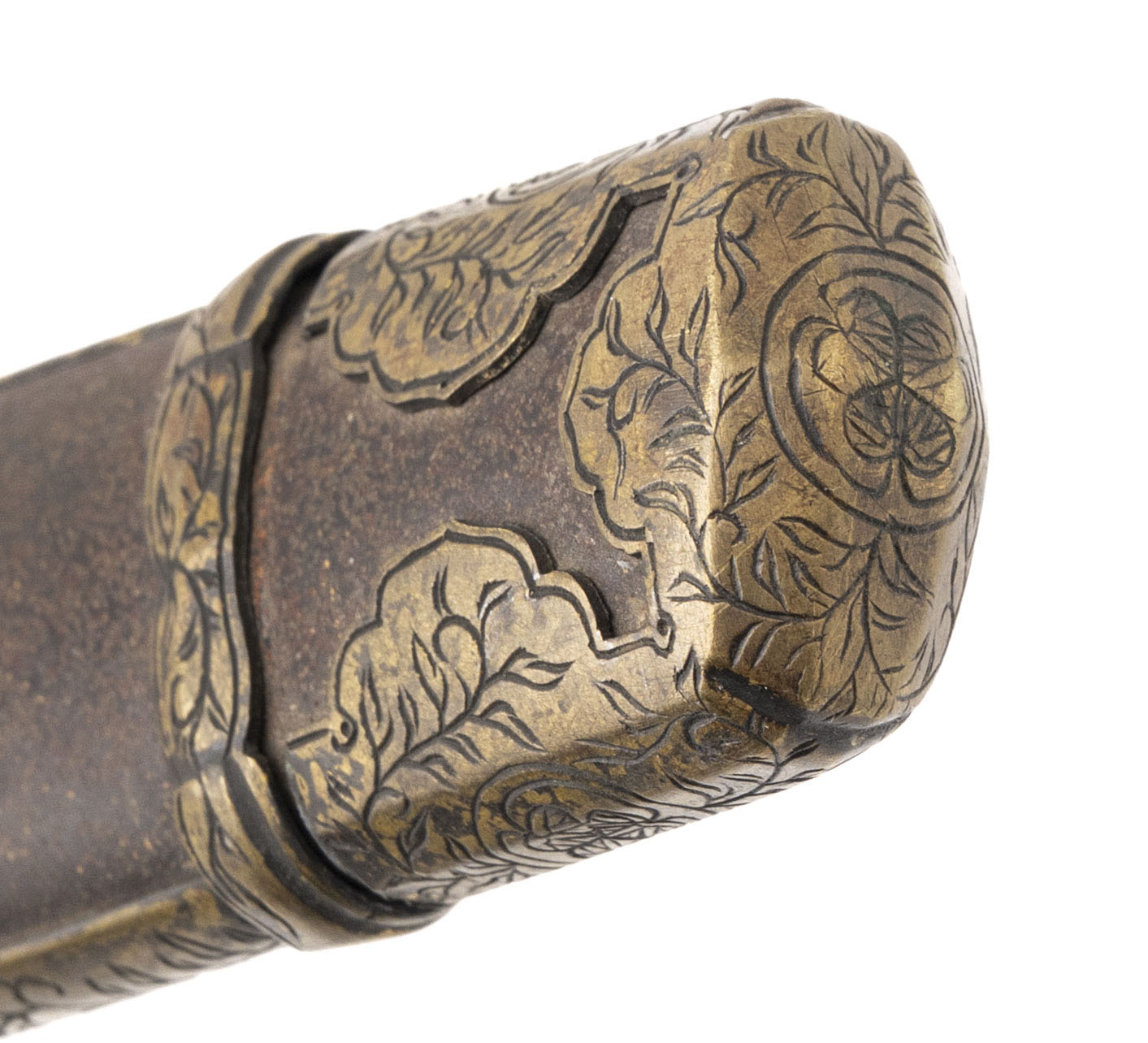
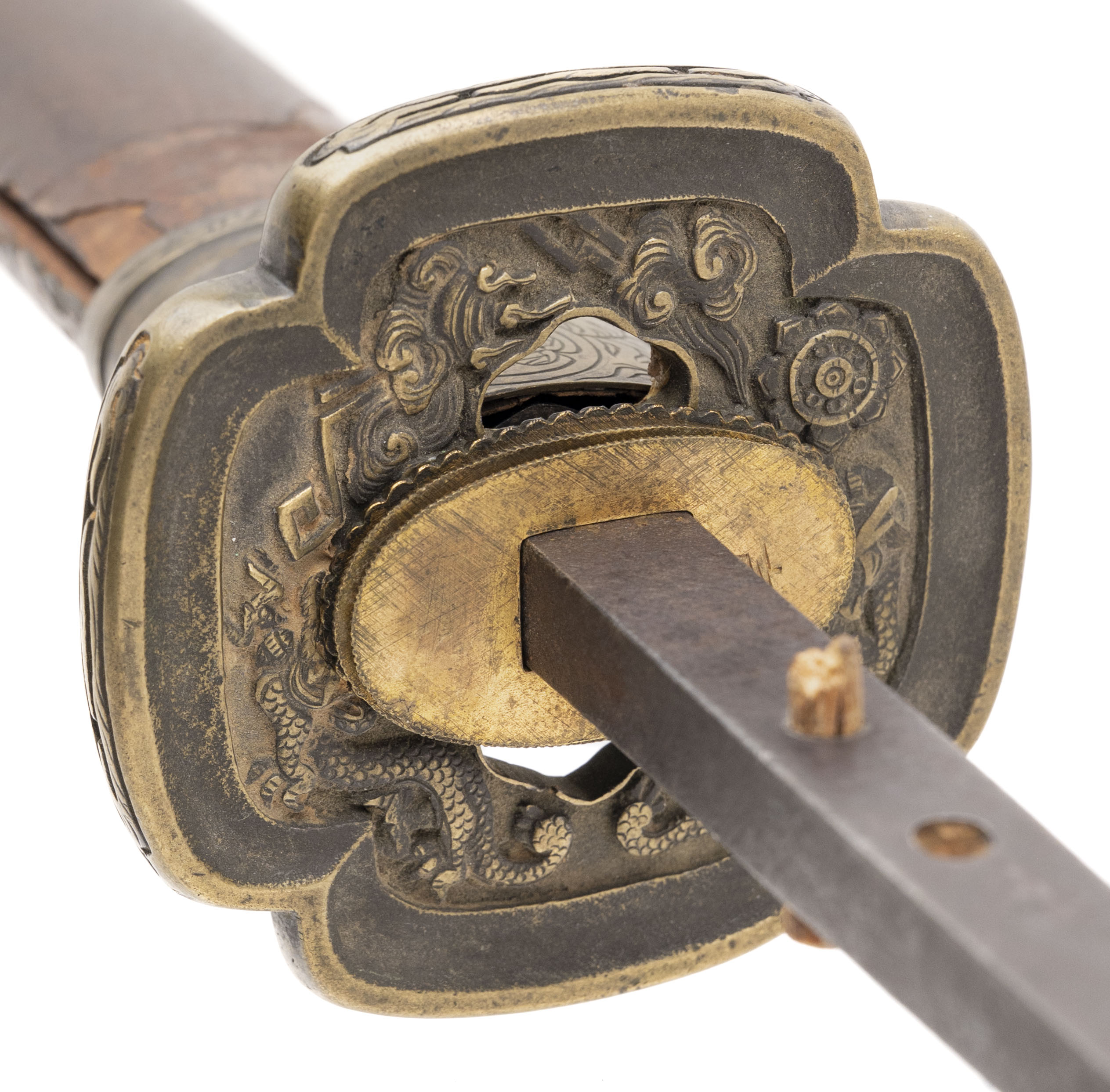
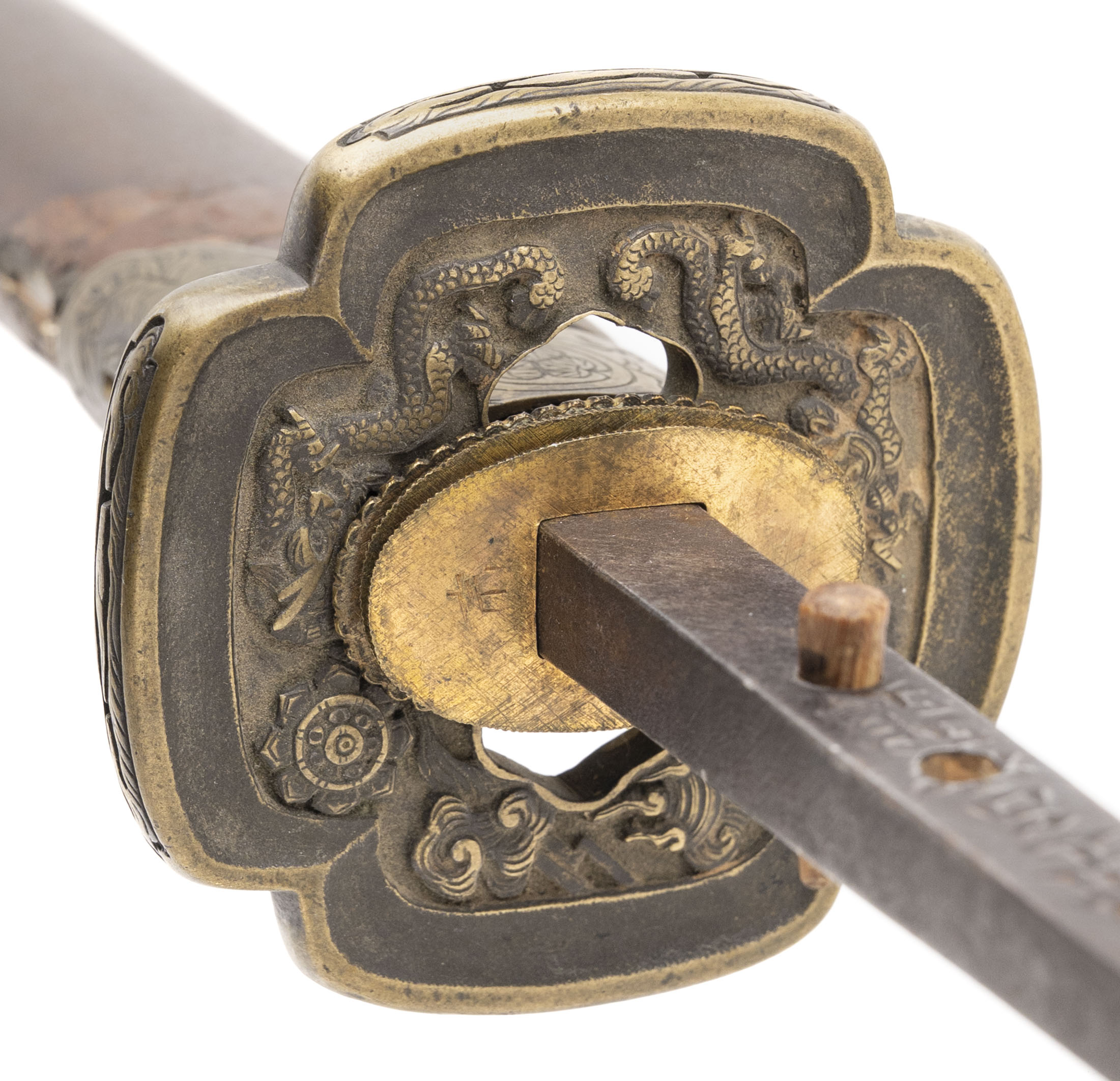
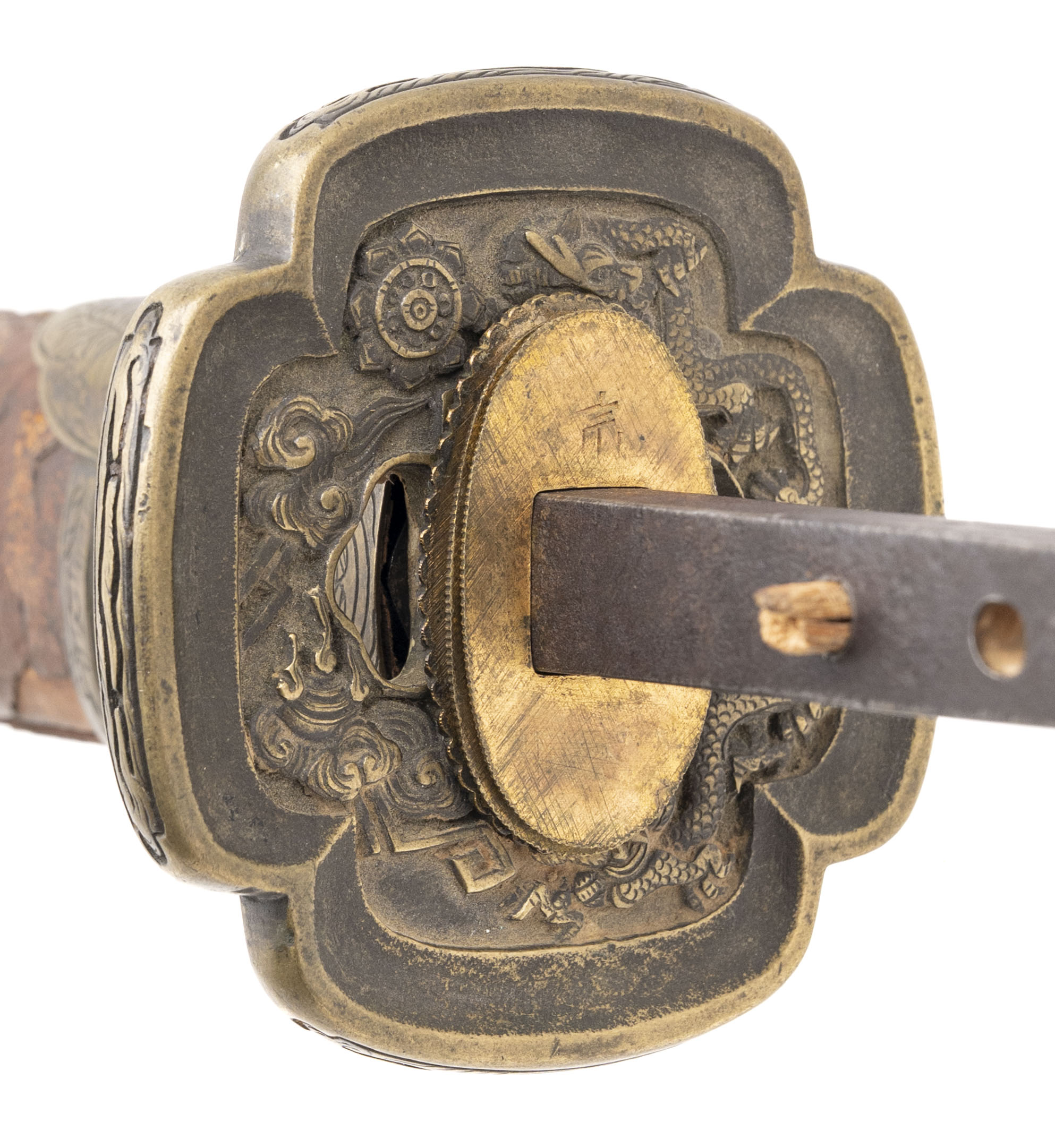
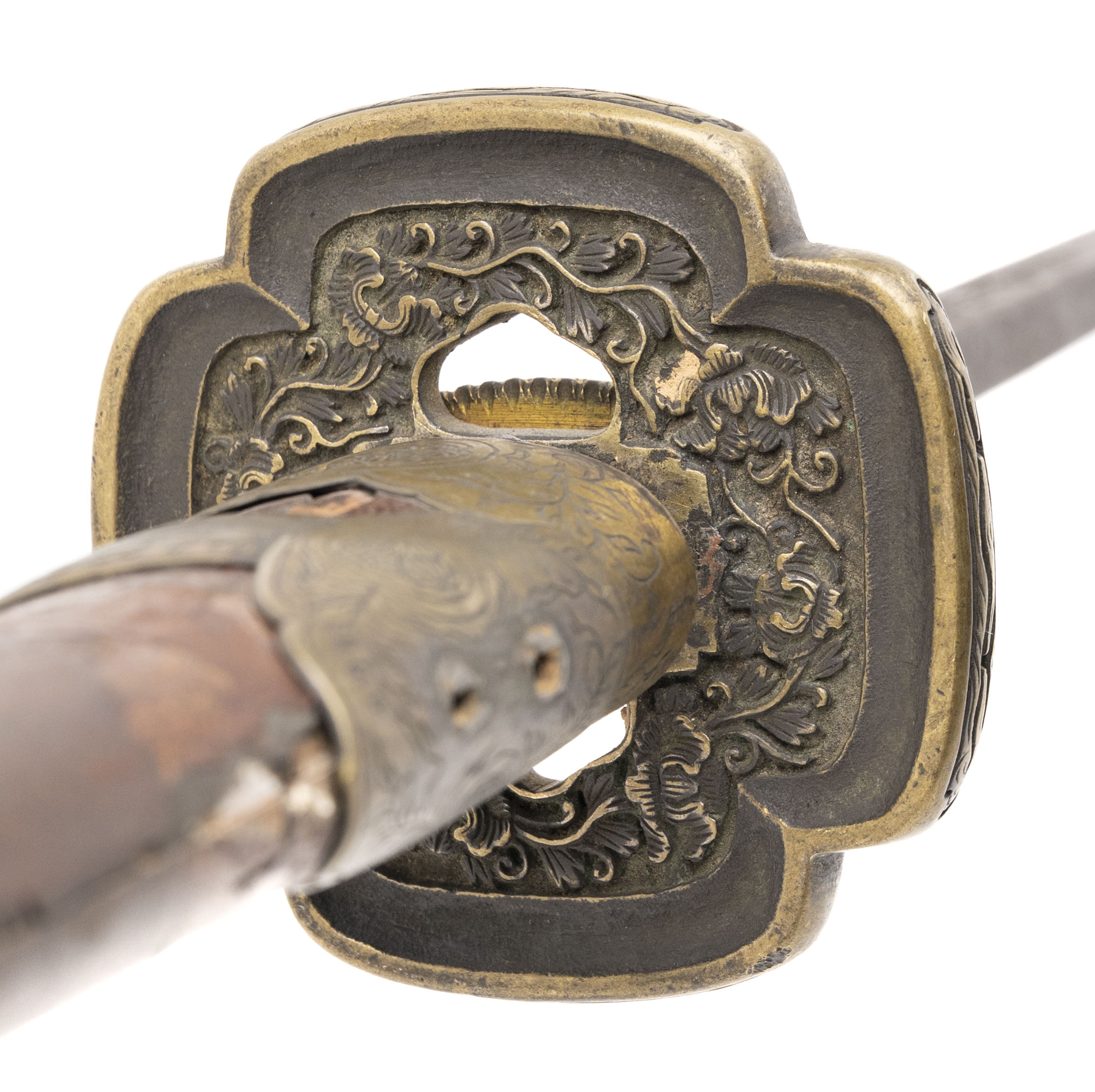
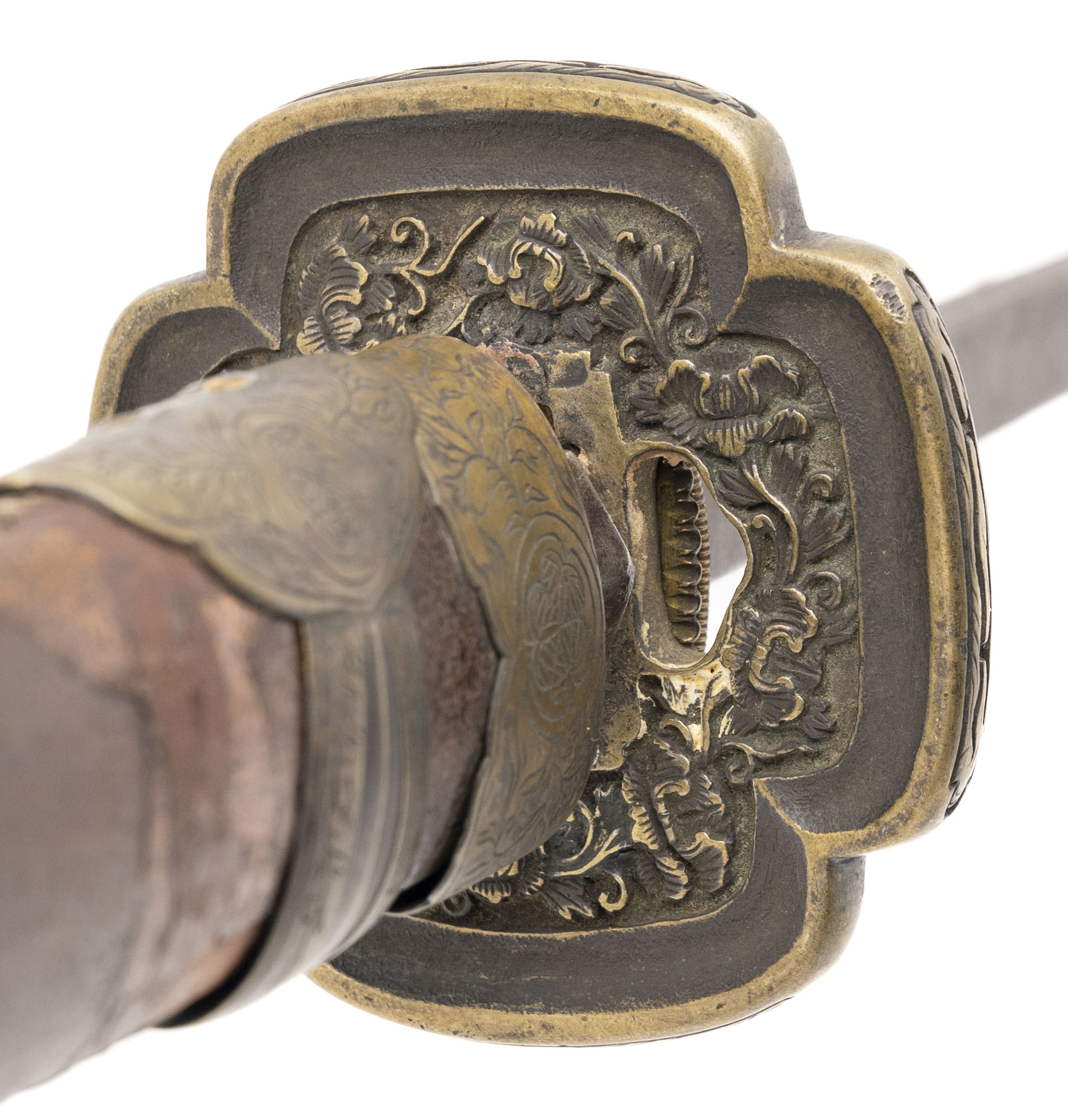
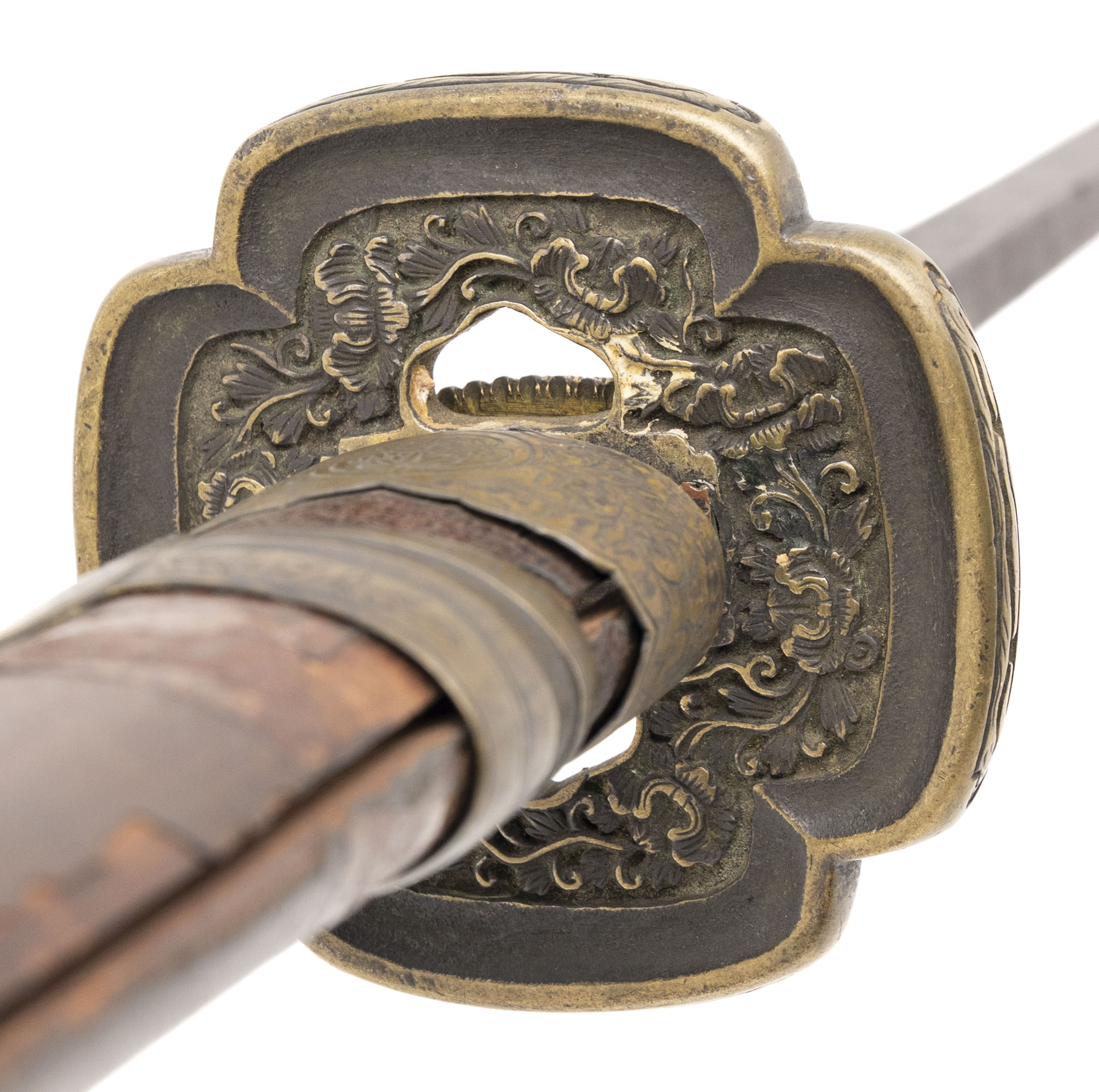
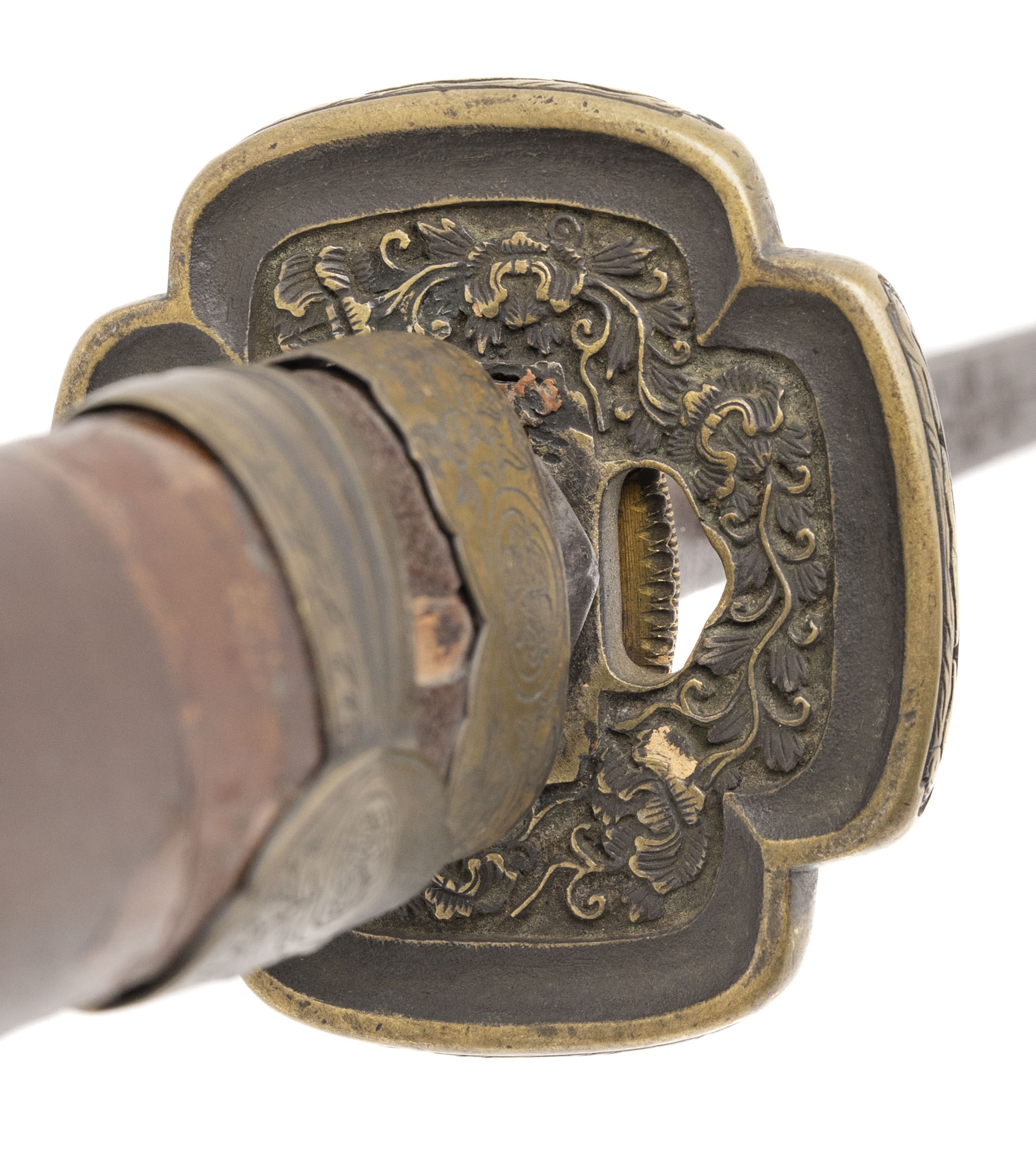
Blade: A massive ōmi-yari with a nagasa of 28” — unusually long for the type. The blade is of su-yari form, double-edged with a long central ridge and a deep bo-hi extending down the shaft. The geometry remains sharp and crisp, with a rounded spear point (minor edge bruise noted). Bright polish shows a clean ji and activity in the ha, though some areas display surface scratches and cloudiness from earlier oxidation. Nakago: Long tang with two mekugi-ana, cut with the detailed mei: 「能登国住藤原義之」 (Noto Kuni jū Fujiwara Yoshiyuki). Translation: “Yoshiyuki of the Fujiwara clan, residing in Noto Province.” Yasurime are straight, typical of Edo-period workmanship. Mounts: Unusually, this yari is found in katana-style mounts rather than on a pole. • Tsuba: Heavy brass/bronze guard of mokko-gata form, decorated in low relief with twin coiling dragons among clouds on the obverse and reverse. The carving is detailed, with additional symbolic motifs including a Buddhist wheel. The hitsu-ana are intact. • Saya: Lacquered wood saya fitted with decorative brass bands and kojiri. The lacquer finish shows flaking and wear but retains its original Edo-period character. • Other fittings: The tsuka (handle) is missing, but seppa and other spacers remain present. Condition: The blade is in a bright polish, with some abrasions and a few surface blemishes, but overall remains impressive. Mounts are worn, with lacquer losses to the saya, but all major components are intact and display well. Remarks: Ōmi-yari of this size are rare, especially when signed and mounted in katana-style koshirae. The blade’s mei attributes it to Fujiwara Yoshiyuki of Noto Province, a documented Edo-period smith. This was not a battlefield yari but rather a prestige piece — likely for ceremonial or display use in the late Edo period.
You might be also interested in…

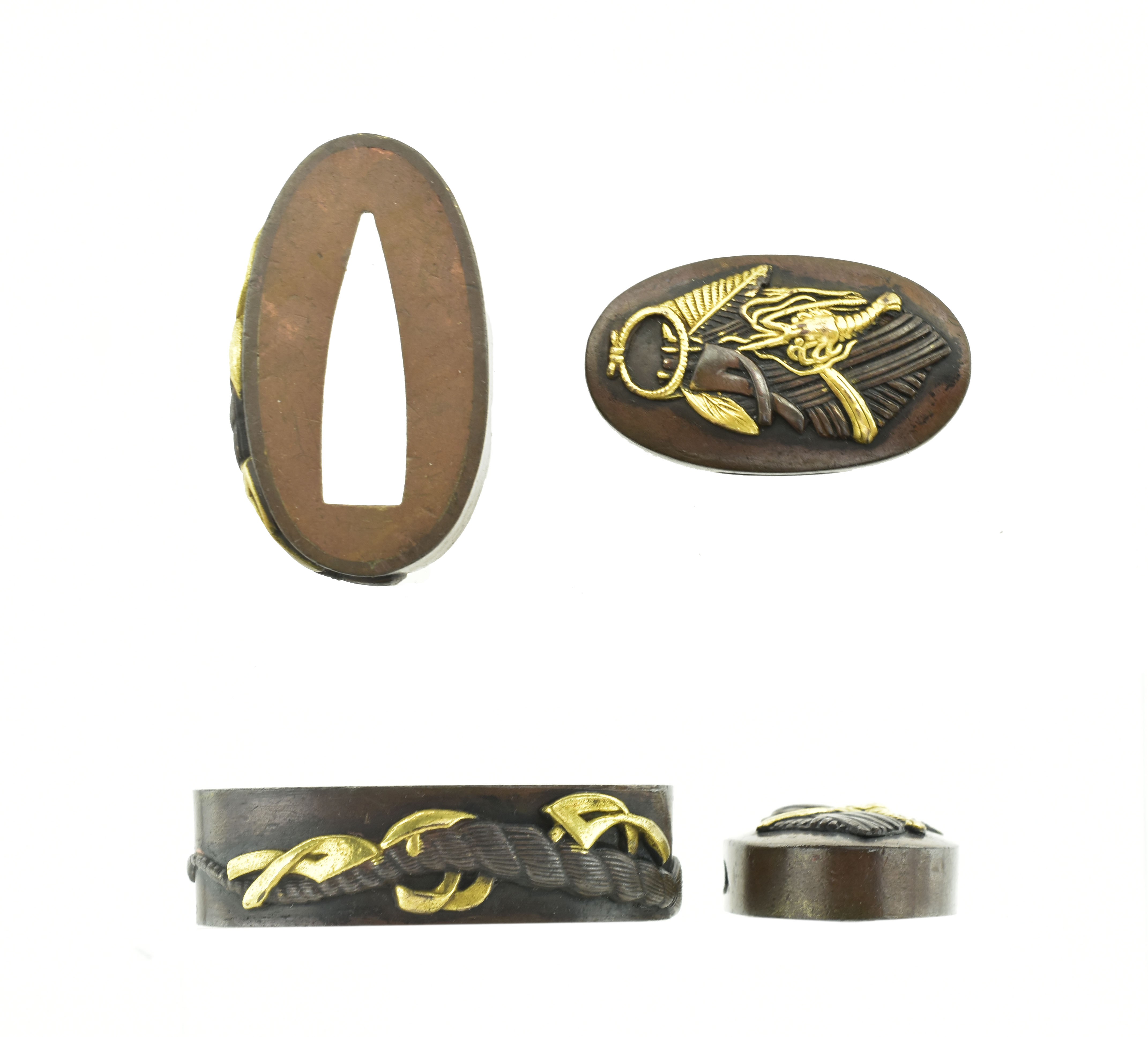
Kinko Fuchi Kashira (MGJ1402)
$345.00Kinko Fuchi Kashira. With polished copper ground, Unknown motif with gold and copper highlights, unsigned and boxed.Add to cartVery Rare Japanese Pierced Arrowhead (MGJ1389)
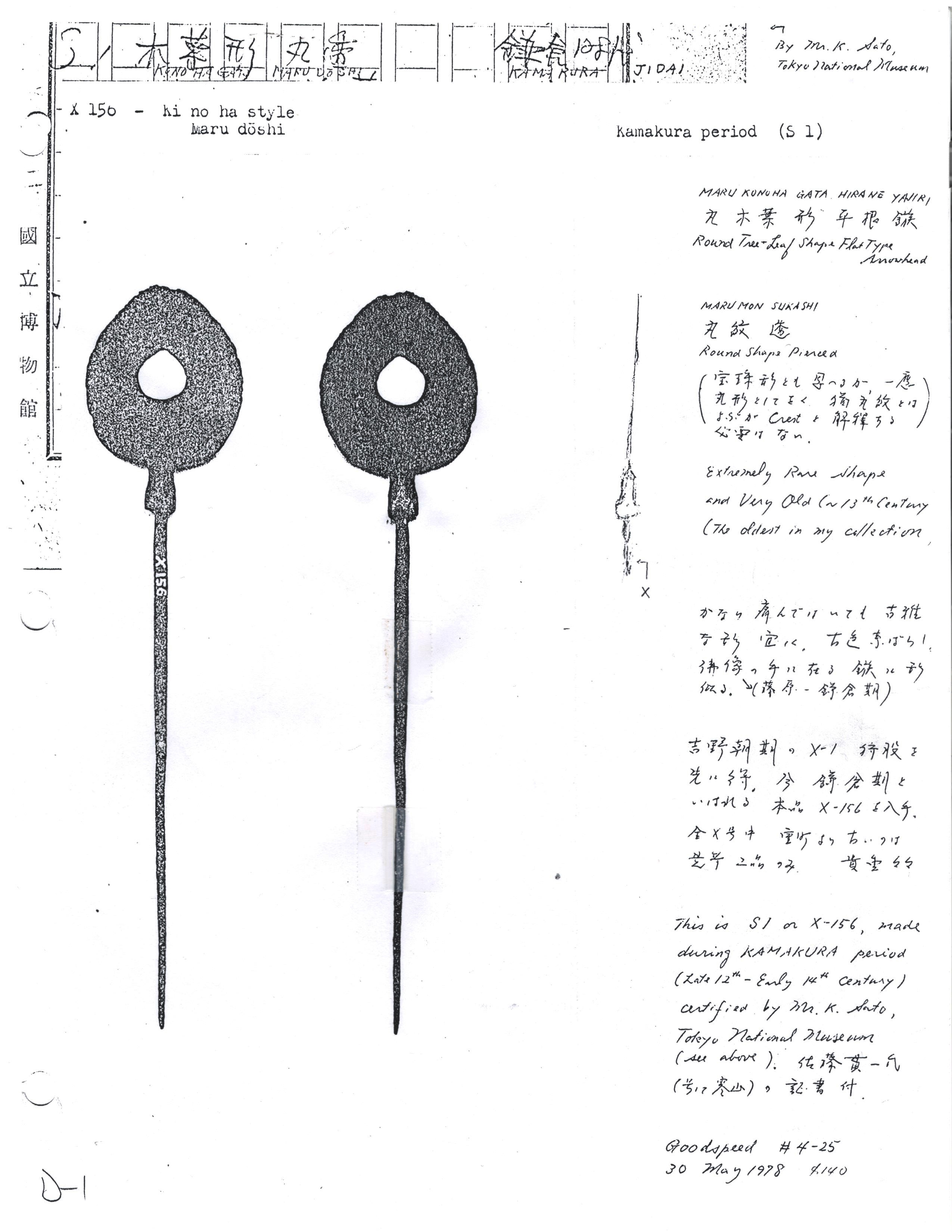
$1,500.00Very Rare Japanese Pierced Arrowhead. A very rare round (maru) pierced Japanese arrowhead from the Kamakura period (1188-1333). Dr. Kansa Sato of Toky...Read more