
6 Types of Lever-Action Firearms and Their History and Design
Key Takeaways
- Lever-action firearms shaped the development of repeating rifles in the 19th and 20th centuries.
- Henry and Winchester models introduced influential design changes.
- Marlin rifles offered an alternative approach to lever-action engineering.
- Classic firearms attract collectors for their history, craftsmanship, and distinctive designs.
- Model, condition, provenance, and production details matter when researching collectible firearms.
The lever action rifle is a special type of gun that is unique to American guns. These designs were known for their use of levers and were often used in sporting and hunting communities, as well as by collectors. Today, collectors admire classic firearms for their design and historical value.
While the basic operating mechanism is the same, there are variations depending on the design of the lever action gun, the magazine configuration, and the purpose of the gun. These disparities show the evolution of technology over generations.
1. Henry Lever-Action Rifles
Introduced in 1860, the Henry rifle helped establish the lever-action rifle as an important development in American firearms design. Associated with Benjamin Tyler Henry and the New Haven Arms Company, it used a metallic rimfire cartridge and a tubular magazine beneath the barrel.
It had a repeating mechanism allowing for several shots without the need for manual reloading after each shot. The Henry Rifle was used during the American Civil War and had an impact on subsequent, lever-action rifles. It is a collectible item due to its unique design and historical significance.
2. Winchester Model 1866
The Winchester Model 1866 followed the Henry rifle with several refinements. Known as the “Yellow Boy” for its brass-colored receiver, it introduced a side-loading gate that made loading the tubular magazine more convenient.
The Model 1866, produced by Winchester Repeating Arms Company, kept the familiar Winchester lever-action but made a difference in how the ammunition was loaded. It was the design that evolved Winchester’s signature and had an impact on the design of subsequent repeating rifles.
3. Winchester Model 1873
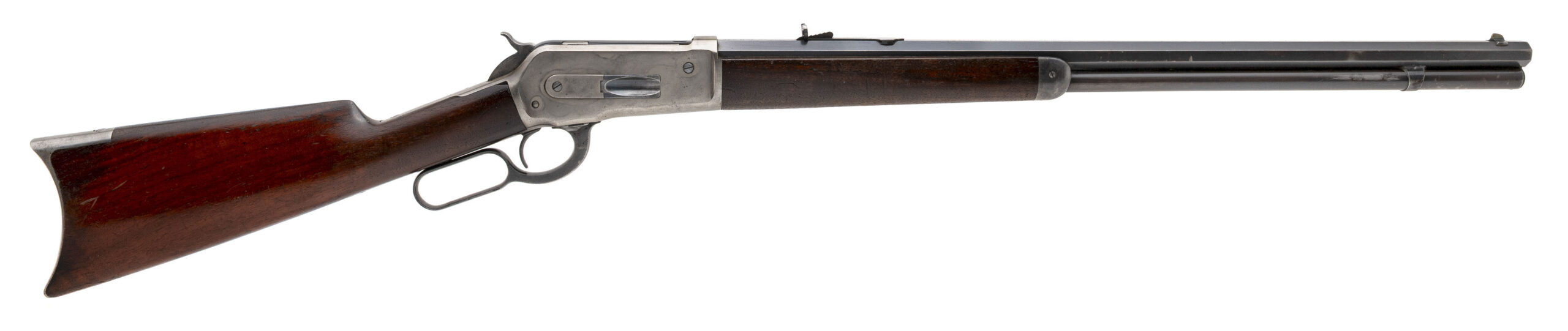
The Winchester Model 1873 was a part of the Winchester Revolution and is often called “The Gun that won the West.”
It was produced in various models and calibers and became popular throughout the United States. The production period, markings, configuration, and condition are frequently considered during research of individual examples. The model also depicts the popularity of repeating rifles during the late 1800’s.
4. Winchester Model 1894
Designed by John Moses Browning and introduced in 1894, the Winchester Model 1894 became especially associated with sporting and hunting use.
Its streamlined design and long production history contributed to its popularity. The model was among the early American sporting rifles designed around smokeless-powder cartridges, with specific features varying by version.
Differences in stock configuration, barrel length, finish, and manufacturing period make the Model 1894 an interesting subject for historical research.
5. Marlin Lever-Action Rifles
Marlin developed lever-action rifles that offered an alternative to Winchester designs. Models such as the Model 1893 and Model 336 demonstrate the company’s approach to firearm engineering.
Many Marlin designs feature a solid-top receiver and side ejection, distinguishing them from numerous traditional Winchester-pattern rifles. Introduced in 1948, the Model 336 became a well-known sporting rifle.
Marlin’s history shows how competing manufacturers developed different solutions to meet changing preferences and manufacturing needs.
6. Modern Lever-Action Rifles
Today, lever-action firearms continue to be a part of the sporting and collecting world. In contemporary designs, the material may be updated, new sights added, modern finishes adopted and other changes implemented.
Some are still made in the traditional style while others have embraced more modern manufacturing techniques. When collecting firearms, collect the original historical firearm and be able to differentiate this from reproductions, refurbished firearms, and newly manufactured firearms. An item’s background can be clarified by the manufacturer for documentation and model-specific research.
How to Understand the Evolution of Lever-Action Rifles
The history of lever-action rifles is not simply a sequence of new models. It is a story of changing engineering priorities, from developing practical repeating mechanisms to improving ammunition loading, refining sporting designs, and adapting traditional platforms to modern preferences.
Three factors help explain this evolution:
- Operating and loading design: The mechanism and magazine arrangement distinguish one historical model from another
- Manufacturing and intended use: The changes in production, materials, and sporting requirements influenced later designs.
- Historical and collector significance: A model’s production history, variations, and documented provenance contribute to its place in firearms history.
Viewed through these factors, the Henry, Winchester, and Marlin families represent more than familiar names. They illustrate different approaches to the development of the repeating rifle.
Why Lever-Action Firearms Remain Collectible
Lever-action firearms represent important stages in repeating firearm development, from early metallic-cartridge systems to modern sporting designs. Their engineering, manufacturer-specific variations, and historical associations continue to interest collectors.
Anyone researching classic firearms should consider authenticity, condition, provenance, production details, and applicable legal requirements. Collectors Firearms provides a resource for people exploring collectible models and researching a gun for sale through a specialist dealer.
FAQs
1. What is a lever-action firearm?
2. Which lever-action rifles are historically significant?
3. What distinguishes Winchester and Marlin designs?
4. What should collectors consider when researching classic firearms?