
What Information Should You Gather Before Buying an Antique Gun Collection?
Key Takeaways
- Identifying each firearm accurately is the starting point for evaluating an antique collection.
- Condition, rarity, maker, originality, completeness, and provenance can all influence collector interest and value.
- A collection should be researched as individual pieces rather than treated as one uniform group.
- Federal law has a specific definition of an “antique firearm,” but state and local requirements can differ.
- Documentation, photographs, ownership history, and previous appraisal records can make professional evaluations considerably easier.
Buying an antique firearm collection is different from buying a single item. A group may contain pieces from different periods, manufacturers, countries, and intended uses. Some may be historically important, while others may have value primarily because they are unusual, complete, or particularly well preserved.
Before searching listings for antique guns for sale, prospective buyers should gather enough information to understand what they are considering. The research stage can reveal differences that are not obvious from photographs alone.
Start With a Six-Point Collection Review
Before making an offer, work through six areas for every firearm:
- Identity: Record the maker, model or pattern, markings, serial number where applicable, approximate production period, and other identifying characteristics.
- Originality: Determine whether important components, finishes, markings, and configuration appear original or have been modified or restored.
- Provenance: Look for evidence supporting previous ownership or historical associations rather than relying solely on an anecdotal story.
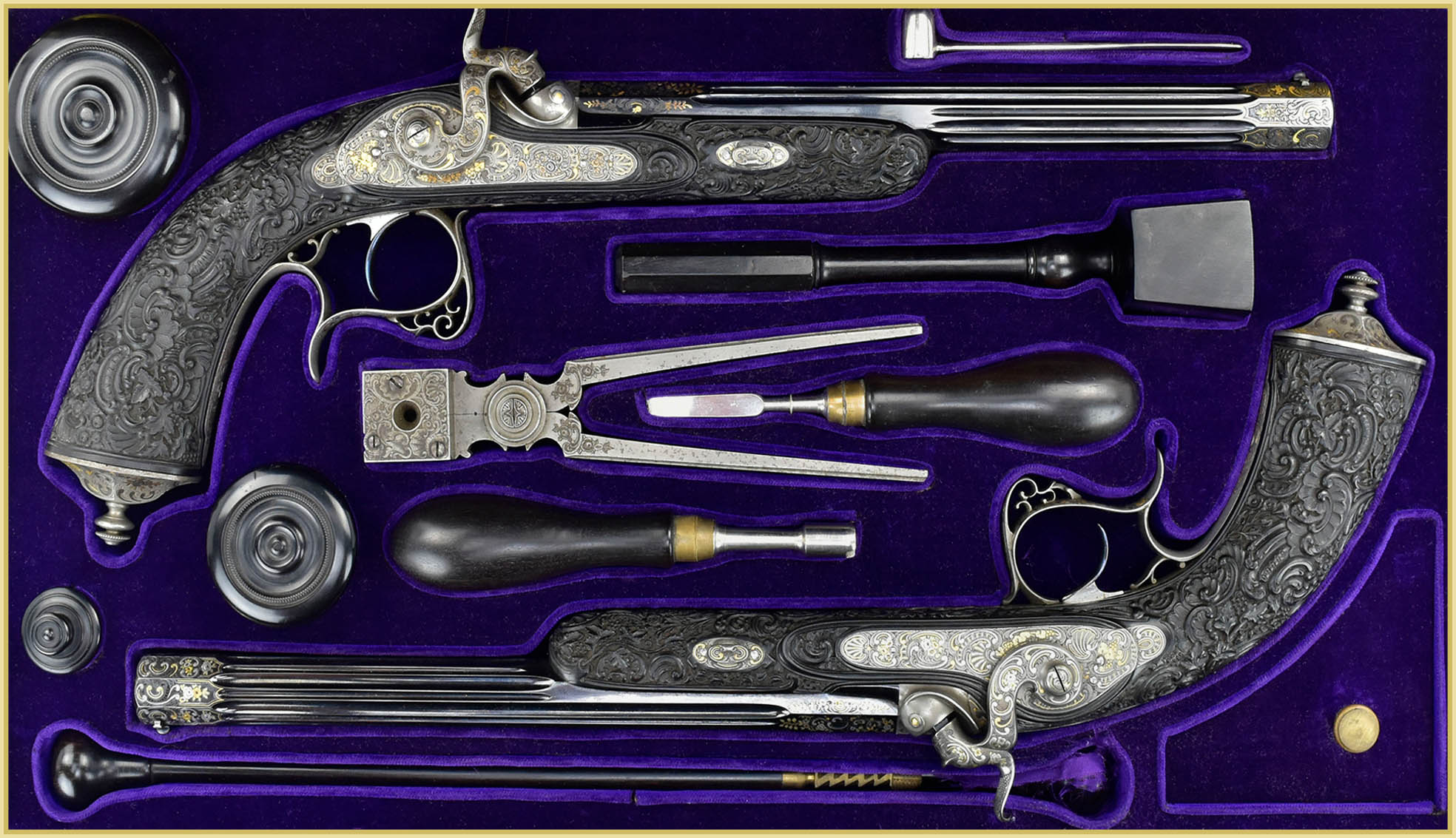
- Completeness: Check whether original cases, accessories, tools, documentation, or matching components remain with the firearm.
- Condition: Review the item for visible wear, signs of corrosion, cracks, parts that may be missing, refinishing issues, and other problems.
- Legal classification: Verify the relevant legal definition and requirements as opposed to presuming that anything called “antique” is treated in the same manner in law.
Examine Condition Without Assuming “Old” Means “Valuable”
Age alone does not establish collector value.
Examine the pictures and words for signs of wear and tear, rust, or deterioration, as well as cracks, missing elements, parts that have been replaced, refinished, or otherwise modified. Original finishes and parts may be quite important, especially where collectors are concerned.
Completeness can be just as revealing. Original cases, accessories, tools, documentation, or other components associated with a particular firearm may add historical context and collector appeal.
A firearm that appears exceptionally clean also deserves scrutiny. Refinishing or restoration may improve appearance while reducing interest among collectors who prioritize originality.
Research Rarity and Historical Significance
A collection becomes easier to understand when each firearm is placed in its historical context.
Was it produced in large numbers or for a short period? Does it represent an important development in firearms technology? Was the manufacturer particularly influential? Is the model associated with a military campaign, sporting tradition, notable individual, or specific historical period?
This research can also prevent a common mistake: assuming that every firearm from an earlier period is automatically scarce.
Understand What “Antique” Means Legally
Under current federal regulations, an antique firearm generally includes firearms manufactured in or before 1898, along with certain qualifying replicas and muzzleloading firearms that meet the regulatory definition.
State and local laws may impose additional requirements. Anyone purchasing a collection should verify the rules applicable to the specific transaction and location rather than relying on a general assumption about antique firearms.
Make Research Part of the Purchase
The most useful information is often found before a buyer makes an offer. Identification, provenance, condition, rarity, completeness, and legal classification each contribute to a clearer picture of an antique collection.
For buyers considering a collection through a Gun shop in Houston, professional guidance can be particularly useful when individual firearms are difficult to identify or appear to have unusual historical or collector significance.
Collectors Firearms can help buyers explore antique and collectible firearms with greater attention to their individual characteristics, history, and documentation.
FAQs
What should I look for when buying antique guns for sale?
Are old guns for sale automatically considered antique firearms?
Can a Gun shop in Houston help evaluate antique collection?
Does provenance increase the value of antique guns?