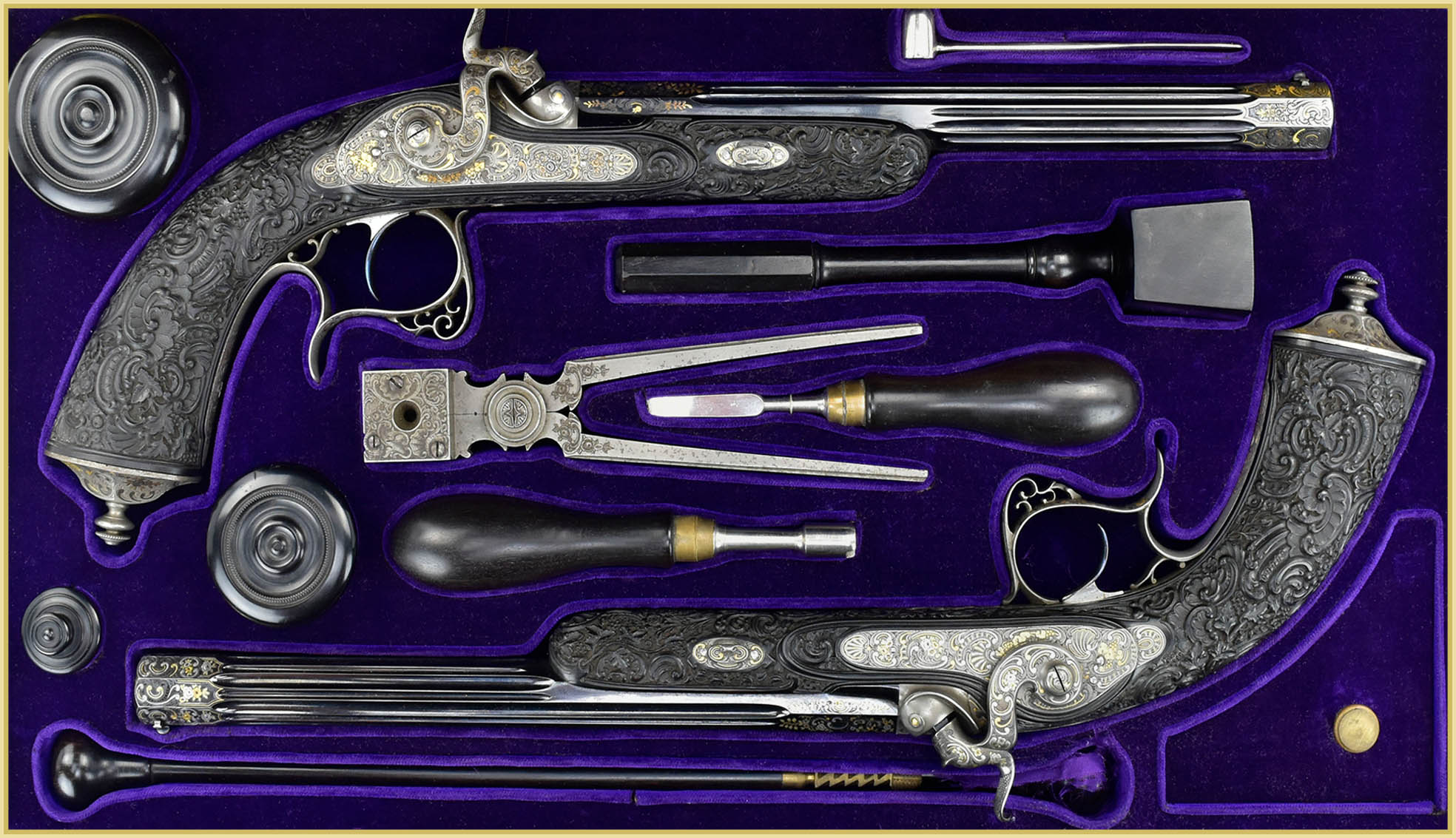
Happy Pastime of Arms Collecting – A Gun Collector’s Q&A
Many of us folk who engage in the happy pastime of arms collecting, a hobby that goes far beyond the actual weapons to include accessories, accoutrements, reference works, perhaps uniforms, and a multitude of other stuff, tend to forget that they have made considerable financial investments in piecing together their collections.
Frequently, their thoughts of recovery from fire, flood, theft, and other travails are awakened only when disaster falls upon others, blithely under the misapprehension that “I have good insurance – I’m covered.” Usually, “good insurance” translates to Homeowners’ insurance. Now, whereas such insurance may provide the wherewithal for a new roof, replacement carpets and furniture, etc., or even a new house, shockingly, it rarely provides any meaningful coverage for our arms collections. The following paragraphs penned by Dick Salzer give the information that all collectors should be aware of in order to make the decisions necessary to at least cover the cost of their financial investment in arms.
Gun Insurance – Is it worth the cost?
Several years ago, I received a letter from my homeowner’s insurance carrier indicating that the personal property loss clause would only cover firearms losses up to a maximum of $1000. Until then, I had complacently assumed that losses due to theft or fire would be covered. This, of course, gave me pause to consider what would happen to my investment in collectibles should I have a fire or burglary.
Since insurance policies seem to be written for people who love fine print, legal language and confusing terminology, I decided to ask a trusted purveyor of gun insurance, Steve Boyet, to answer some simple questions, in layman’s language, as to just what things are and are not covered by a typical policy.
One of the first things he indicated is that the answers to the following questions might differ with each company, so it is important to use the following information only as a guideline for questions to ask your own insurance agent. Be sure to check with the agent for specific coverages, exclusions and requirements for your policy.
Q: What type of policy will give the best coverage?
A: Generally, an All Risk policy will provide more comprehensive coverage than a Specified Peril policy.
Q: What would be covered in an All Risk policy?
A: Usually, Fire, theft, breakage, wind related losses, flood, earthquake (except for historically high risk areas), transit/shipping, unattended vehicle coverage, shows-exhibit coverage, pairs and sets coverage, temporary storage, consignment coverage (for dealers) all on a worldwide basis to name a few.
Q: How can I determine if an insurance company is financially stable? The preferred rating organization is A.M. Best.
A: A good rule of thumb is to be sure that the insurance company has a rating of “A” or better.
Q: What about deductibles?
A:They vary with insurance companies. Usually, they range from 0 to $2500. A dealer might have a $1000 deductible, a collector $0-$500. It is best to avoid variable deductibles within a policy as they are confusing to most policyholders.
Q: How do you differentiate between a dealer and a collector?
A: Usually, if you are occasionally selling an incidental piece out of your collection, you are a collector. If you are selling to the public, including regularly selling online, from a store, or having a table at gun shows, you can be classified as a dealer.
Q Must I list each piece in my collection?
A: Some companies require that each item be scheduled with a description and value. Many, however, allow a blanket amount or a combination of the two methods.
Q: How do I arrive at a value for the items in my collection?
A: Insurance companies will not usually give advice on the values of collections or inventory. You are the source of this decision, but within reason. If a collector has a single piece with an extremely high value, the company may request an appraisal by a qualified expert.
Q: If I have a loss due to damage or fire, can I buy back the item from the insurance company at its residual value?
A: The policyholder, in most cases, has the first right of refusal for the salvage. Some insurance companies allow a greatly reduced salvage price; others do not.
Q: When does an item become covered by insurance?
A: Usually, the item is covered at the moment you own it. This includes the time it is in the hands of an auctioneer awaiting an auction, in some cases.
Q: Am I required to have an alarm system in my home to qualify for insurance?
A: Most companies require a central station burglary alarm system and a fire alarm system to be installed. Usually, it is mandatory to require an alarm system in your car if unattended vehicle coverage is provided. Installation of an alarm system usually qualifies you for a 16% discount on your homeowner’s insurance.
Q :Can I acquire insurance to cover only a part of the value of my collection?
A: Most insurance companies expect you to have the greater balance of your collection insured.
Q: Is it mandatory to have photographs of the items in my collection?
A: It may or may not be required, depending on the company, but it is prudent to have as much backup as possible. This includes photos, receipts, and other documentation. You should keep good records and store a set off-premises — remember, safes are only good for one or two hours in a fire.
Q: When I ship a gun, do I need to insure it to full value?
A: If your policy covers shipping and you have a zero deductible, you are fully covered for the value you have selected. If you have a deductible, you should insure your piece for the amount of the deductible with the shipper to bring the coverage to the full value you have selected.
As to whether gun insurance is worth the cost, the decision is yours. It is a matter of personal economics. Simply put, how much of a loss are you, as a collector, willing to pay out of your pocket?